Empower Your Community: How to Use FluxLocal to Streamline Your Neighborhood News Delivery
Discover how to simplify your community updates, engage neighbors, and automate your neighborhood news delivery using the powerful features of FluxLocal.
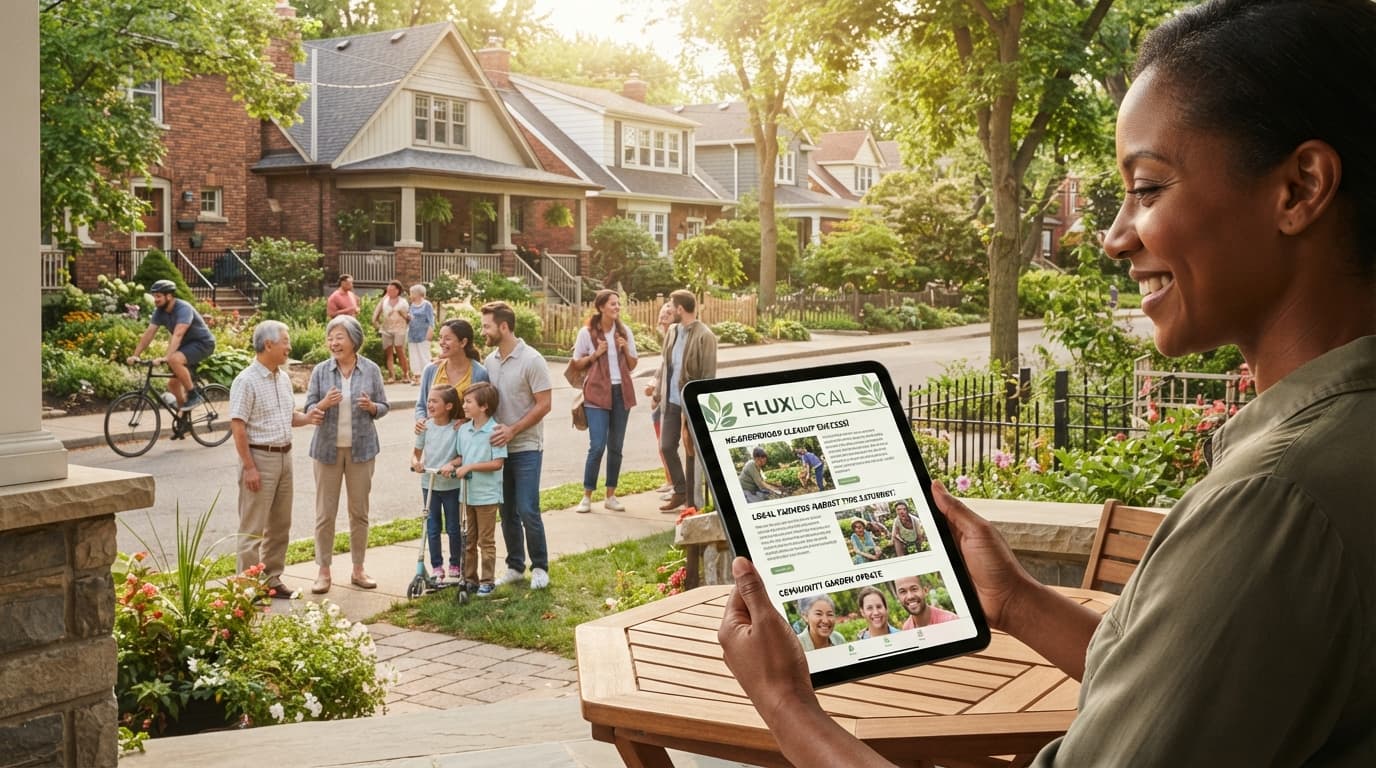
Imagine walking down your neighborhood street on a brisk Saturday morning. You see a soggy, printed flyer taped to a telephone pole, its ink running from the morning dew. A few doors down, a physical newsletter sits half-submerged in a puddle on a neighbor's driveway. Meanwhile, in the digital realm, your neighborhood’s unofficial Facebook group is flooded with polarized debates about parking spaces, burying an important announcement about next Tuesday's vital town hall meeting.
In our hyper-connected world, keeping a local community genuinely informed is surprisingly difficult. Traditional communication channels are either too easily ignored, physically ruined, or drowned out by noisy social media algorithms. Neighborhoods need a reliable, clean, and centralized way to share hyper-local updates. This is where modern neighborhood news delivery comes in, and learning how to streamline this process is the key to building a safer, more connected, and vibrant community.
The Evolution of Neighborhood Communication
To understand how to streamline neighborhood news, we must first look at how community communication has evolved. Historically, neighborhoods relied on physical bulletin boards, printed circulars, and door-to-door word of mouth. While these methods possessed a certain rustic charm, they lacked scale, accessibility, and speed.
The digital age promised a solution through social media platforms and email listservs. However, these tools introduced new challenges:
- Algorithm Fatigue: Major social media algorithms prioritize sensationalism and outrage over local utility. A critical post about a water main break can easily be buried beneath viral videos.
- Privacy Concerns: Many residents are hesitant to join massive, data-harvesting social networks just to find out when the neighborhood garage sale is happening.
- Information Fragmentation: When some neighbors use Nextdoor, others use Facebook, and a few rely on email, critical updates become scattered across disjointed channels.
- Spam and Clutter: Standard email inboxes are constantly bombarded with commercial promotions, causing important neighborhood newsletters to get lost in the spam folder.
Today, the demand is clear: communities require a dedicated, distraction-free environment designed specifically for hyper-local news. By streamlining this delivery, you ensure that every resident—regardless of their tech-savviness—receives the right information at the right time.
A Step-by-Step Guide to Organizing Your Neighborhood News
Streamlining your news delivery isn't just about choosing a piece of software; it’s about establishing an efficient, repeatable system that honors your neighbors' time and attention. Here is a step-by-step roadmap to setting up a high-performing neighborhood news channel.
Step 1: Define Your Core Content Pillars
Before sending out a single update, define what actually constitutes "neighborhood news." If your updates are too broad, residents will tune them out. Focus on high-value, hyper-local content pillars, such as:
- Safety & Alerts: Utility outages, road closures, neighborhood watch updates, and severe weather preparations.
- Community Events: Block parties, park cleanups, seasonal festivals, and local school board meetings.
- Local Business Spotlights: Introducing new cafes, highlighting resident-owned businesses, or sharing exclusive neighborhood discounts.
- Civic Updates: Local zoning changes, construction schedules, and neighborhood association (HOA) decisions.
Step 2: Establish a Consistent Cadence
Consistency builds trust. If you send updates sporadically, residents won't know when to expect them, leading to lower engagement. Choose a frequency that matches your community's active pace. For most residential areas, a comprehensive weekly digest paired with real-time "alert" notifications for urgent matters strikes the perfect balance.
Step 3: Crowdsource and Delegate
You don't have to be a lone journalist reporting on your entire zip code. Streamline your content gathering process by setting up simple submission forms. Encourage local gardening clubs, neighborhood watch captains, and event organizers to submit their updates directly to you. This reduces your editorial workload and fosters a deeper sense of community ownership.
Step 4: Optimize for Accessibility
Your neighborhood is diverse. Some residents prefer checking their emails on desktop computers, while others rely entirely on mobile notifications. Ensure your news delivery format is responsive, highly readable, visually appealing, and accessible to those with visual impairments.
The FluxLocal Advantage
While establishing a workflow is essential, executing it manually can quickly turn into a exhausting part-time job. Managing spreadsheets, designing templates, and dealing with delivery errors takes away from the joy of community building. This is where FluxLocal steps in to revolutionize your local communications.
Designed specifically to solve the unique challenges of hyper-local communication, FluxLocal provides a dedicated, streamlined platform that takes the friction out of neighborhood news delivery. Here is how the platform empowers community organizers, HOAs, and local advocates:
Centralized Content Management
Instead of juggling draft emails, social media posts, and physical flyers, the platform serves as your single source of truth. You can draft, schedule, and organize all your neighborhood updates from a clean, intuitive dashboard. This ensures that your messaging remains consistent across all digital touchpoints.
Automated Newsletters and Digests
One of the most time-consuming aspects of news delivery is layout design. With its built-in templates, the platform allows you to drag, drop, and publish professional-looking community digests in minutes. You can automate weekly roundups, pulling in content that has been submitted throughout the week without having to rebuild templates from scratch.
Targeted Hyper-Local Filtering
Not every update is relevant to every resident. A block-specific street paving project only affects a handful of homes, while a neighborhood-wide festival interests everyone. The platform allows you to segment your audience seamlessly, ensuring that residents only receive notifications that directly impact their specific streets or interests. This targeted approach prevents notification fatigue and keeps engagement rates incredibly high.
Secure and Ad-Free Community Environment
Unlike traditional social networks that monetize user data and display distracting, irrelevant ads, this platform focuses entirely on community connection. Your neighbors can engage with local news in a secure, private, and distraction-free environment, building trust and encouraging more authentic interactions.
Best Practices for Writing High-Engagement Neighborhood Updates
Having the right tools is half the battle; the other half is crafting content that your neighbors actually look forward to reading. Here are a few professional writing tips to elevate your local news delivery:
1. Keep It Scannable
Most people skim-read on their mobile devices during busy mornings. Use descriptive headers, bold key text, and bulleted lists to break up long blocks of text. If you are announcing an event, make the date, time, location, and RSVP link immediately obvious.
2. Maintain a Friendly, Inclusive Tone
Your neighborhood news should sound like it’s written by a neighbor, not a sterile corporation or a bureaucratic government agency. Use warm, welcoming language, and celebrate the diverse achievements of your local residents.
3. Use High-Quality Visuals
A picture is worth a thousand words, especially in local news. Include photos of neighborhood cleanups, snapshots of local parks, or clean graphics illustrating upcoming detours. Visuals immediately grab attention and make your updates feel more alive.
4. Always Include a Call to Action (CTA)
Every piece of news should prompt an action, even if it's a simple one. Whether you want residents to RSVP to a block party, voice their opinion on a local project, or simply "say hi" in the comments, always provide a clear next step.
Transforming Your Neighborhood: Real-World Impact
What happens when a neighborhood successfully streamlines its news delivery? The results extend far beyond digital metrics.
Consider the story of a suburban community that struggled with low turnout at its annual general meetings and felt increasingly disconnected. Crime was rising slightly, but rumors on social media exaggerated the threat, causing widespread panic.
By moving their communication to a streamlined local news system, they were able to deliver calm, factual, and timely safety updates directly to residents' inboxes and phones. They launched a weekly digest highlighting volunteer opportunities, local student achievements, and upcoming neighborhood maintenance. Within six months, HOA meeting attendance doubled, rumor-mongering decreased dramatically, and a newly formed neighborhood watch program saw record participation. The community transformed from a collection of isolated households into a resilient, tightly knit neighborhood.
Take the Next Step in Community Building
Keeping your neighborhood informed shouldn't be a chore, and staying updated shouldn't feel like a chore for your neighbors. By transitioning away from outdated, fragmented systems and embracing a streamlined, modern approach, you can foster a culture of transparency, collaboration, and pride right outside your front door.
Are you ready to elevate your neighborhood's communication? Discover how easy community publishing can be by visiting FluxLocal today. Simplify your distribution, engage your residents, and build a stronger, more connected community, one update at a time.
---CONTENT_END---