Master the Beat: A Solo Publisher's Guide to Managing Sources and Local News
Being a solo local publisher is thrilling but overwhelming. Here is your ultimate guide to streamlining your sources, automating your workflow, and mastering your beat.
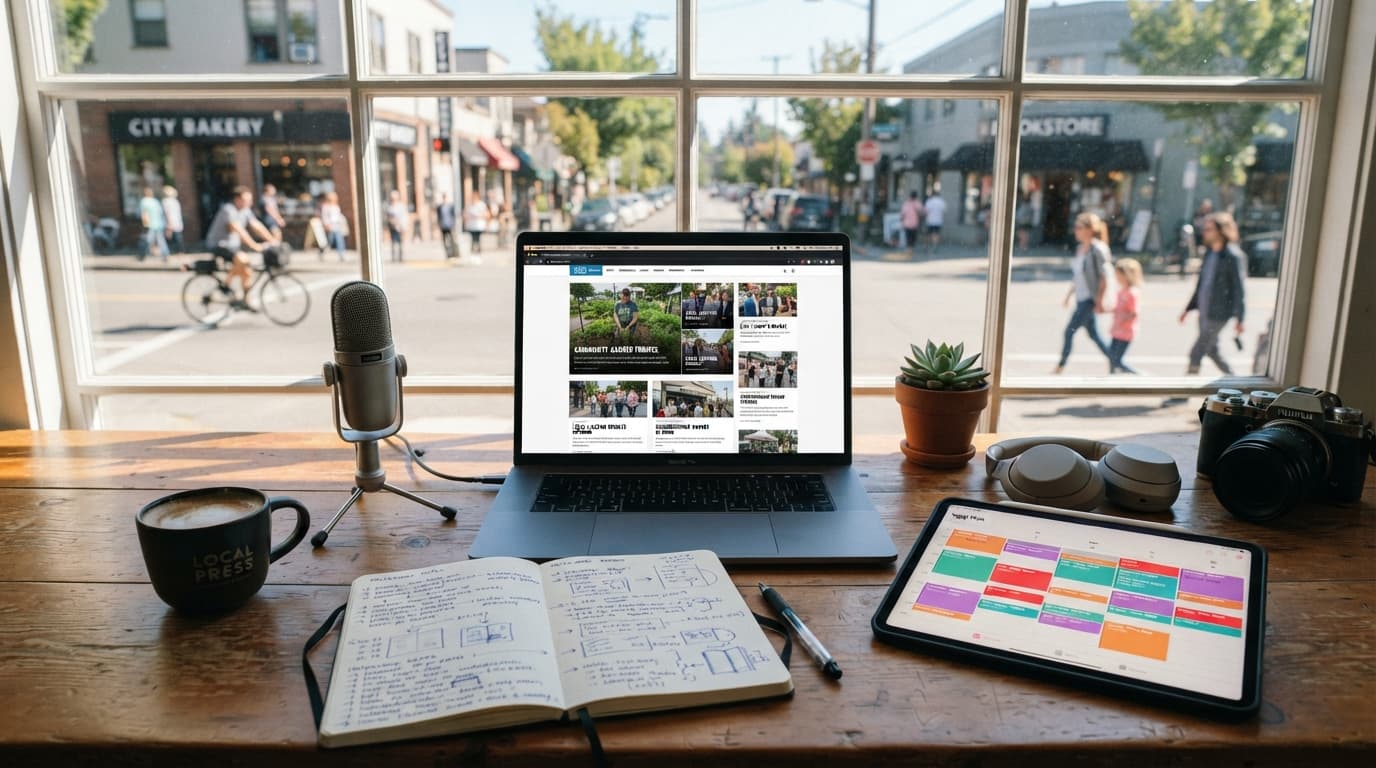
Imagine this: It is 7:00 PM on a Tuesday. The local school board is debating a controversial redistricting plan, a minor water main break has shut down a major intersection downtown, and a new community-owned bakery is celebrating its grand opening. As a solo publisher, you are the editor, reporter, photographer, social media manager, and ad sales representative. You want to cover all of these stories with the depth and accuracy your community deserves, but there are only so many hours in a day.
The rise of independent local digital publishing is one of the most exciting developments in modern media. Solo publishers are stepping into the gaps left by consolidating media conglomerates, bringing nuance, passion, and accountability back to community reporting. However, the sheer volume of information can quickly lead to burnout. Without a newsroom full of beat reporters, how do you keep your finger on the pulse of your city or neighborhood?
The secret does not lie in working twenty-four hours a day. It lies in building a systematic, scalable framework for managing your sources and information pipeline. In this comprehensive guide, we will explore how solo publishers can organize their networks, leverage modern technology to automate news gathering, cultivate deep community trust, and utilize powerful distribution platforms like FluxLocal to make their independent voices heard.
The Anatomy of Local Sources: Categorizing Your Network
To manage your sources effectively, you first need to understand who they are and where they sit within the ecosystem of your community. When you are a team of one, you cannot afford to treat every source with the same ad-hoc approach. You must categorize your network into distinct buckets, each requiring a different relationship management strategy.
1. Institutional Sources (The Civic Beat)
These are your formal, public-facing entities: city council members, school board representatives, police public information officers (PIOs), county clerks, and municipal public works departments. They are the backbone of hard local news. The key to managing institutional sources is predictability. You must know their meeting schedules, when their agendas are published, and who to contact when a press release leaves more questions than answers.
2. Hyper-Local Influencers and Pillars (The Culture Beat)
Every community has its pillars—the individuals who seem to know everyone and hear everything before it becomes public knowledge. This category includes neighborhood association presidents, long-standing small business owners, faith leaders, local activists, and librarians. Unlike institutional sources, who communicate through formal channels, these sources require relational investment. They are your eyes and ears on the ground, offering context and historical perspective that public records cannot provide.
3. Organic Digital Signals (The Virtual Beat)
Before news hits the mainstream, it often bubbles up in digital micro-communities. Local Facebook groups, Nextdoor threads, neighborhood subreddits, and citizen-reporting apps like Citizen or Ring Neighbors are rich environments for story ideas. While these sources require heavy verification, they are invaluable for identifying emerging trends, community anxieties, and hyper-local human-interest stories.
Building Your Digital Rolodex: Tools and Schema
Gone are the days of physical business cards stuffed into a desk drawer. As a solo publisher, your digital Rolodex needs to be highly searchable, secure, and accessible from your phone while you are out in the field. A simple spreadsheet can work initially, but moving toward a relational database tool like Airtable or Notion will revolutionize your workflow.
When setting up your source database, aim to capture more than just names and phone numbers. A robust source tracking schema should include the following fields:
- Name and Pronouns: Fundamental for accurate and respectful reporting.
- Role/Affiliation: E.g., "President of the Downtown Merchants Association" or "Parent-Teacher Organization Treasurer."
- Contact Information: Direct phone numbers, email addresses, and preferred messaging apps (Signal, WhatsApp, etc., for sensitive sources).
- Primary Beat: Tag them with categories such as Education, Local Business, Infrastructure, or Arts & Culture.
- Trust Rating: A private internal scale (e.g., 1 to 5) indicating their past reliability and objectivity.
- Last Contacted Date: A crucial field to ensure you are regularly touching base with key contacts, not just when you need a quote.
- Notes/Personal Details: Small touchpoints, like their favorite coffee shop or their children’s names, which help build genuine human rapport over time.
By organizing your contacts this way, you can easily filter your database. For instance, if a new housing development is proposed, you can quickly filter for "Real Estate" or "Housing" beats and instantly see a list of community members, advocates, and city planners you need to contact for a well-rounded piece.
Streamlining the Information Influx: Automation for Solo Publishers
One of the biggest challenges for a solo publisher is information fatigue. If you are manually visiting dozens of municipal websites, scrolling social media feeds, and checking your inbox every hour, you will have no time left for actual reporting. You must let technology do the heavy lifting of information gathering.
1. Master the Power of RSS and Feeds
Many local government websites, school districts, and local police departments still publish updates via RSS feeds. Use a feed aggregator like Feedly or Inoreader to compile these feeds into a single dashboard. Instead of visiting twenty different websites, you can review all public announcements in one centralized stream every morning.
2. Leverage Google Alerts and Social Listening
Set up highly specific Google Alerts for your coverage area. Use quotation marks for exact matches (e.g., "Oakridge City Council" or "Oakridge High School") to filter out national noise. On social media, use platforms like TweetDeck (X Pro) to set up column searches for localized keywords, hashtags, and geographic coordinates. For Facebook and Nextdoor, set aside a dedicated thirty minutes a day to skim local groups, rather than keeping those tabs open constantly.
3. Automate Agenda and Document Monitoring
Civic decisions are hidden inside boring, multi-page PDFs uploaded to obscure municipal portals. Tools like Visualping or Distill.io can monitor specific government web pages for changes. The moment a city council uploads a new agenda PDF, you will receive an automated email alert showing exactly what text was added or modified. This ensures you are always the first to know about upcoming votes on development, budgeting, or local ordinances.
The Human Element: Cultivating and Protecting Trust
No amount of digital organization or automation can replace genuine human trust. In a small community, your reputation is your most valuable currency. If you lose the trust of your sources, your pipeline of exclusive stories will dry up instantly.
To build and maintain this trust as an independent publisher, consider implementing these core practices:
- The Informal "Coffee Chat": Make it a rule to meet at least two sources for coffee every week with absolutely no immediate agenda. Do not record the conversation or look for a quick quote. Simply ask, "What are people in your circle talking about right now?" This long-term relationship-building pays massive dividends when major stories break.
- Clarity on Attribution: Always establish the ground rules of an interview before the conversation begins. Ensure both you and your source understand the differences between "on the record," "on background," and "off the record." Write these definitions down if necessary, as community members may not be familiar with journalistic jargon.
- Protecting Sensitive Sources: If a municipal employee or a corporate whistle-blower reaches out with sensitive documents, protect them. Encourage them to use encrypted communication channels like Signal. Never store sensitive source information on unsecured public cloud drives.
- Radical Transparency and Correction: If you make a mistake, own it immediately. Update your article with a clear correction note detailing what was wrong and how it was fixed. Your readers and sources will respect your honesty, which ultimately strengthens your credibility.
The FluxLocal Advantage: Scaling Your Reach and Community Impact
Once you have mastered the art of managing your sources and gathering stories, the next hurdle is distribution. How do you ensure that your hard-hitting, deeply researched local reporting actually reaches the residents who need it? This is where strategic partnerships become vital.
For independent and solo publishers, FluxLocal offers an unparalleled advantage. As a dedicated local community platform, FluxLocal acts as a powerful amplifier for hyper-local content. By integrating your publication's feed with the platform, you can bypass the unpredictable and often punitive algorithms of major social media corporations.
FluxLocal places your stories directly in front of an engaged, geographically targeted audience that is actively seeking local updates. This means your reporting on school board decisions, local business openings, and community events gets delivered straight to the people living in those specific zip codes. It bridges the gap between your independent newsroom and the wider community, allowing you to focus on what you do best—investigating, writing, and connecting—while FluxLocal handles the heavy lifting of localized audience discovery and distribution.
Conclusion: Building a Sustainable Future for Local News
Local journalism is the lifeblood of a healthy democracy. It keeps citizens informed, holds local power to account, and fosters a shared sense of community identity. While being a solo publisher is undeniably challenging, you do not need a multi-million dollar budget or a sprawling newsroom to make a profound impact.
By categorizing your sources, building a structured digital Rolodex, automating your municipal monitoring, and prioritizing deep human relationships, you can run a highly efficient, professional, and sustainable media operation. Combined with the localized distribution power of community platforms, you have all the tools necessary to become the definitive voice of your neighborhood.
Are you ready to take your hyper-local publishing to the next level, reach more readers, and simplify your distribution? Partner with a platform designed specifically for community voices. Visit FluxLocal today and learn how we can help you amplify your local coverage, connect with your neighbors, and build a sustainable future for your independent publication.
---CONTENT_END---