Paid Ads for Hyper-Local Growth: What Works on Facebook and Nextdoor
Want to dominate your local market? Discover how to use Facebook and Nextdoor ads to target neighborhoods, drive foot traffic, and turn nearby residents into loyal customers.
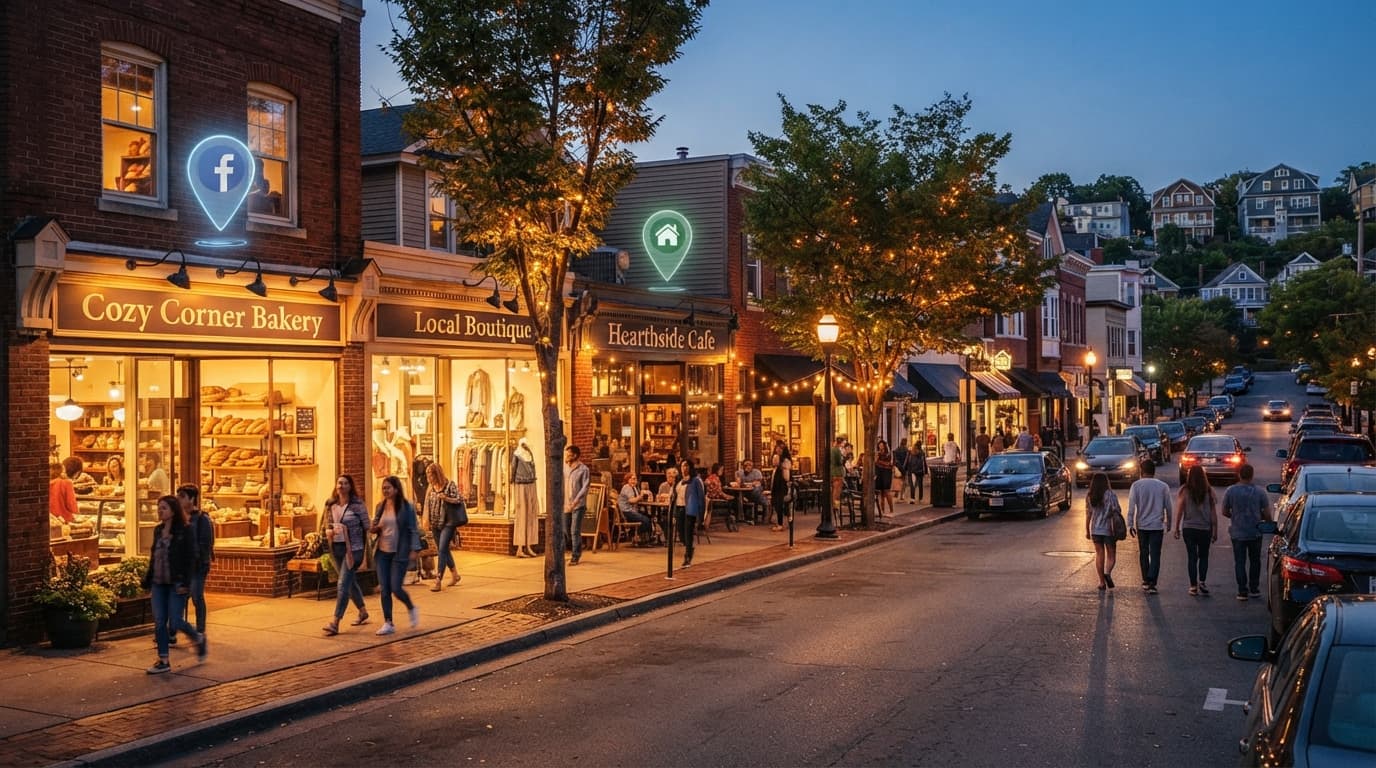
Imagine standing on the sidewalk outside your business with a megaphone, trying to shout your message to everyone within a three-mile radius. Some people might look, most will ignore you, and you will likely exhaust yourself in the process. For years, traditional local advertising—like flyers, local newspaper ads, and billboards—felt exactly like this. You spent a premium price hoping your message would land in front of the right neighbor at the exact moment they needed your services.
Today, hyper-local paid advertising has completely changed the game. Instead of shouting to the masses, you can now whisper directly to the household three blocks away that is actively looking for a plumber, a dentist, a cozy dinner spot, or a boutique gym. When it comes to reaching these nearby consumers, two digital giants stand head and shoulders above the rest: Facebook and Nextdoor.
But how do these platforms differ, and how can you build a hyper-local ad strategy that actually converts neighborhood impressions into foot traffic and paying customers? In this comprehensive guide, we will break down the mechanics of hyper-local paid ads, compare the strengths of Facebook and Nextdoor, and show you how to leverage their unique features to scale your local footprint.
Understanding the Power of Hyper-Local Targeting
Hyper-local targeting is the practice of focusing your advertising efforts on a highly concentrated geographic area—sometimes down to a single zip code, a specific neighborhood, or a tight radius around a physical storefront. For local service providers, brick-and-mortar retailers, and community brands, this precision is a superpower. It ensures that every single dollar of your ad budget is spent on prospects who are physically close enough to buy from you.
To succeed with hyper-local ads, you must shift your mindset from "reach" to "relevance." You do not need millions of impressions; you need high-quality touchpoints with the people who walk past your storefront or live within your service territory daily. Facebook and Nextdoor both offer powerful tools to achieve this, but they do so in fundamentally different ways.
Facebook Ads: The Precision targeting Powerhouse
With billions of active users worldwide, Meta’s Facebook remains the undisputed heavyweight of social media advertising. For local businesses, its sophistication lies in its behavioral data and advanced demographic targeting.
Geographic Radius Targeting
Facebook allows you to drop a pin directly on your business address and target users within a radius as small as one mile. This is incredibly powerful for dense urban areas where customer behavior changes block by block. You can also target users based on their relationship to that location:
- People living in this location: Ideal for long-term local service businesses like dentists, accountants, or home cleaners.
- People recently in this location: Perfect for restaurants, entertainment venues, or retail shops trying to capture foot traffic and commuters.
- People traveling in this location: Great for local tourism, hotels, and unique experiences targeting out-of-town visitors.
Interest and Behavioral Layering
Where Facebook truly shines is its ability to layer geographic data with deep user interests. If you run a premium pet grooming salon, you do not just want to target everyone within two miles; you want to target people within two miles who are also marked as "dog owners" or have shown interest in "organic pet food." This prevents ad spend waste and dramatically increases your conversion rates.
What Works Best on Facebook
- Visual Storytelling: Use high-quality carousel ads or short-form video reels showing your team, your physical space, or your customer transformations.
- Lead Generation Forms: For service businesses, Facebook's native lead forms allow users to request a quote or book an appointment without ever leaving the app.
- Event Promotion: If you are hosting a grand opening, a local workshop, or a seasonal sale, Facebook Events combined with local ad spend is highly effective.
Nextdoor Ads: The Neighborhood Trust Network
While Facebook is a social utility for connecting with friends and interests, Nextdoor is a utility built purely around geography and neighborhood utility. Users log onto Nextdoor with a "neighborhood-first" mindset. They are looking for recommendations, local news, safety updates, and nearby businesses. This high-intent environment makes Nextdoor an incredibly fertile ground for hyper-local ads.
The Psychology of the Nextdoor User
When someone is on Nextdoor, they are already primed to support local businesses. They trust their neighbors' recommendations far more than anonymous online reviews. Because Nextdoor verifies the home addresses of its users, you can be 100% certain that your ads are reaching actual residents of your target neighborhoods.
Nextdoor Ad Formats for Local Growth
- Sponsored Posts: These appear seamlessly in the main neighborhood newsfeed. They look like organic posts but allow you to include a clear call-to-action (CTA) button, such as "Call Now" or "Get Directions."
- Local Deals: One of Nextdoor’s most popular features. You can offer a neighborhood-exclusive discount (e.g., "10% off for Oakridge residents"). Neighbors can save these deals directly to their profiles, keeping your business top-of-mind.
- Neighborhood Sponsorships: This premium feature allows real estate agents, home service providers, and local professionals to sponsor specific ZIP codes, securing exclusive, high-visibility ad placements in those areas.
What Works Best on Nextdoor
- Home Services and Urgent Needs: Roofers, plumbers, landscapers, and HVAC technicians perform exceptionally well here. When a storm hits, neighbors immediately turn to Nextdoor to find trusted local help.
- Exclusive Neighborhood Offers: Highlighting that an offer is "just for our neighbors" fosters a sense of community pride and exclusivity that drives engagement.
- Word-of-Mouth Amplification: Encourage your existing local customers to "Fave" your Nextdoor business page. The more recommendations you have, the more organic weight your paid ads will carry.
Facebook vs. Nextdoor: A Direct Comparison
To help you decide where to allocate your hard-earned marketing dollars, let's look at how these two platforms stack up against each other across key performance metrics:
| Feature/Metric | Facebook Ads | Nextdoor Ads |
|---|---|---|
| Audience Intent | Social, casual browsing, discovery | High local intent, utility, recommendations |
| Targeting Precision | Advanced interests, demographics, and behaviors | Verified physical address, ZIP codes, and neighborhoods |
| Ad Creative Options | Highly diverse (Video, Carousel, Reels, Messenger) | Simple, text-and-image focused, localized deals |
| Cost-Per-Click (CPC) | Highly variable; can be optimized for lower costs | Often higher CPC, but usually yields higher-quality local leads |
| Best Suited For | Lifestyle brands, restaurants, events, niche niches | Home services, local retail, real estate, medical practices |
How to Allocate Your Hyper-Local Ad Budget
You do not have to choose one platform over the other; in fact, the most successful local businesses use them in tandem. Here is a simple, battle-tested framework for allocating your monthly ad budget:
The 70/30 Rule for Local Service Businesses
If you run a high-intent service business (like plumbing, roofing, or pest control), allocate 70% of your budget to Nextdoor to capture active searchers and household decision-makers. Allocate the remaining 30% to Facebook to build brand awareness, showcase customer testimonials, and retarget people who have visited your website.
The 70/30 Rule for Lifestyle and Retail Businesses
If you run a boutique, a cafe, a fitness studio, or an event space, flip the script. Allocate 70% of your budget to Facebook to leverage highly visual, lifestyle-focused ad creatives that tap into local interests. Use the remaining 30% on Nextdoor to offer neighborhood-specific promotions and run "Local Deals" to drive physical foot traffic during slower weekdays.
The FluxLocal Advantage
Navigating the nuances of hyper-local advertising can feel like a full-time job. Between setting up geographical radiuses, designing eye-catching creatives, and monitoring your return on ad spend (ROAS), it is easy for busy local business owners to feel overwhelmed. That is where FluxLocal comes in.
As a dedicated local community platform and marketing partner, FluxLocal simplifies the entire hyper-local marketing funnel. We help local businesses bridge the gap between digital ad impressions and real-world community relationships. By aligning your Facebook and Nextdoor ad campaigns with the community-centric tools on FluxLocal, you can create a unified marketing engine that keeps your brand top-of-mind for every resident in your target neighborhood.
Best Practices for Writing Hyper-Local Ad Copy
No matter which platform you choose, your ad creative and copy must speak directly to the local experience. Generic, corporate-sounding ads will be ignored. To stand out, implement these three copywriting rules:
- Name the Neighborhood: Instead of saying "Serving the Greater Metro Area," say "The Go-To Plumber for Maplewood Residents." Seeing their neighborhood name immediately stops a user from scrolling.
- Use Local Landmarks: Reference local high schools, parks, or well-known streets. For example: "Just two blocks down from Central Park—stop by for a post-workout smoothie!" This builds instant credibility and proves you are actually part of the community.
- Focus on Proximity and Speed: Highlight how quickly you can reach them. Phrases like "We live and work right here in [City Name], meaning we can be at your door in under an hour" are highly persuasive for urgent service needs.
Tracking Your Success: Metrics That Matter
When running hyper-local ads, it is easy to get distracted by "vanity metrics" like likes, shares, and broad impressions. To understand your true return on investment, focus on these actionable metrics:
- Cost Per Lead (CPL): How much does it cost you to get a phone call, a completed contact form, or a direct message?
- Offer Redemptions: If you are running a Nextdoor Local Deal, track exactly how many customers physically present the deal at checkout.
- Store Visits: Meta offers offline conversion tracking that can estimate how many people saw your Facebook ad and subsequently visited your physical storefront.
- Customer Acquisition Cost (CAC): Calculate your total ad spend divided by the number of new paying customers acquired. Compare this to the lifetime value (LTV) of those customers to ensure profitability.
Ready to Dominate Your Neighborhood?
Hyper-local paid advertising is not about having the biggest budget; it is about having the most precise map. By combining the visual storytelling and demographic depth of Facebook with the trusted, high-intent ecosystem of Nextdoor, you can build a defensive moat around your local market.
Stop shouting into the void and start building real, lasting connections with the neighbors right outside your front door. If you are ready to take the guesswork out of local marketing and accelerate your community growth, partner with the experts who know your neighborhood best. Visit FluxLocal today to discover how we can help you turn local digital impressions into lifelong loyal customers.
---CONTENT_END---