How to Use 'Question of the Week' to Generate Endless User-Generated Content
Turn your local community into an active content engine using a simple, structured "Question of the Week" framework that drives authentic engagement and long-term retention.
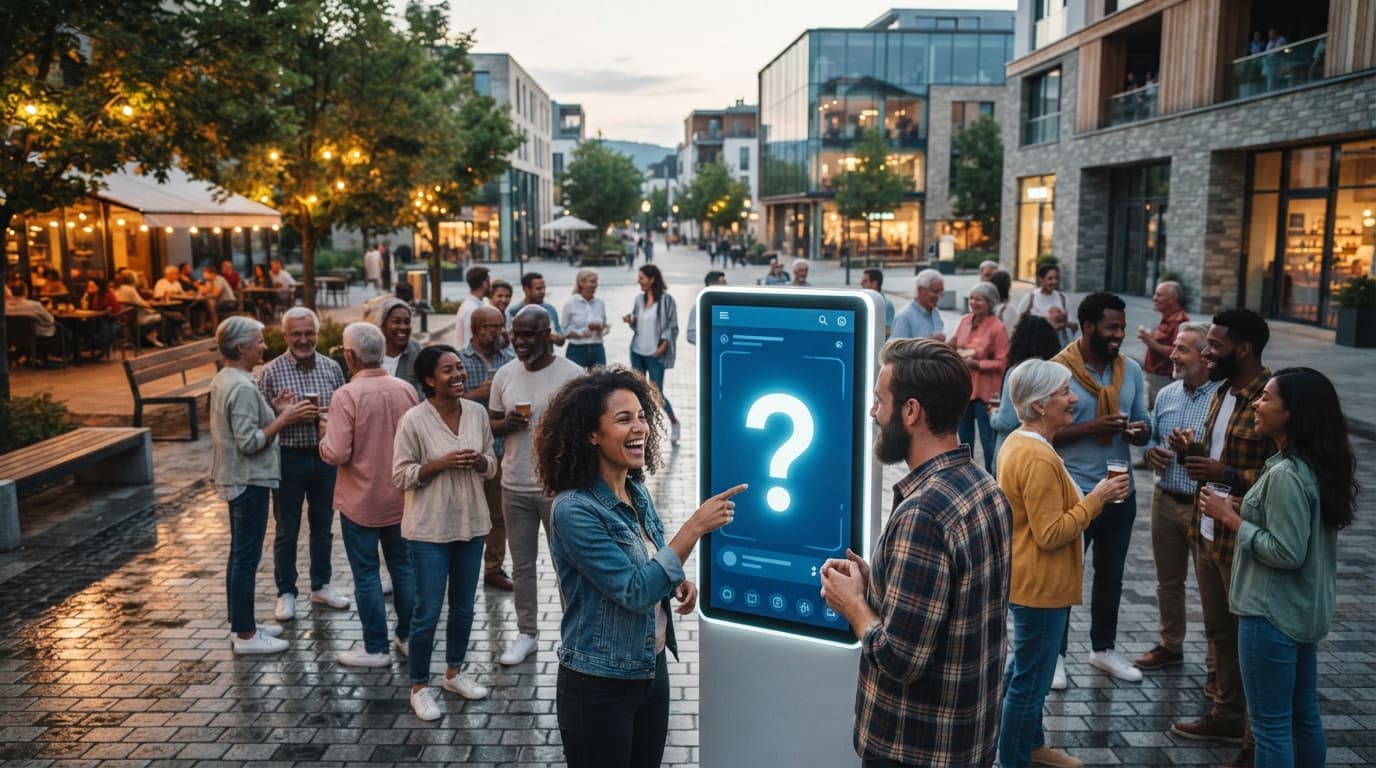
Every local community builder, modern publisher, and neighborhood organizer faces the exact same haunting challenge: the blank page. You know your audience wants vibrant, fresh, and relevant content daily, but keeping up with the content treadmill can drain your team’s time, energy, and creative reserves. Meanwhile, your community members hold a vast reservoir of local knowledge, hilarious stories, hyper-targeted recommendations, and passionate opinions that never make it onto your platform.
What if you could solve your content drought and amplify your community’s voice simultaneously? The solution doesn't require a massive editorial team or a ballooning marketing budget. Instead, it relies on a simple, scalable, and surprisingly potent content mechanic: the "Question of the Week" (QOTW) framework.
When executed with strategic precision, a weekly prompt transforms passive scrollers into active contributors. It converts silent observers into vocal participants, yielding an endless stream of authentic user-generated content (UGC). In this comprehensive guide, we will unpack how to design, execute, and scale a "Question of the Week" engine that keeps your community humming with activity week after week.
Why "Question of the Week" Works: The Psychology of Local Engagement
To understand why this simple tactic yields extraordinary engagement, we must look at the psychological drivers of local participation. People do not engage with vague calls to action like "Share your thoughts on our town!" That open-ended invitation creates cognitive overload. A hyper-focused question, however, lowers the barrier to entry and triggers several key human impulses:
- The Desire for Local Recognition: Residents love sharing their favorite hidden gems, local history knowledge, or personal experiences because it positions them as trusted local experts.
- Low Friction, High Reward: Answering a targeted question takes seconds, yet seeing their answer published or liked by neighbors provides an immediate dopamine hit of social validation.
- Nostalgia and Belonging: Questions about shared local memories foster a powerful sense of place and emotional connection among community members old and new.
- Healthy Debate and Opinion Sharing: Mild, fun debates (such as "Where is the best pizza slice in town?") invite friendly competition that people naturally want to participate in.
Phase 1: Architecting Your Prompts for Maximum UGC Yield
The success of your QOTW engine hinges entirely on the quality of your questions. A bad question leads to crickets; a great question generates dozens or hundreds of rich, publishable responses. To maintain a steady cadence, categorize your weekly questions into four distinct buckets.
1. Recommendations and "Hidden Gems"
These questions leverage your community’s collective wisdom. Everyone wants to show off their secret favorite spots, and prospective visitors or new residents devour this content.
- "What is the one dish at a local restaurant everyone must try before they die?"
- "Where is the quietest coffee shop in town for getting actual work done?"
- "Which local park has the best playground for toddlers?"
2. Nostalgia and Local History
Nostalgia is a potent engagement drug. Long-time residents jump at the chance to reminisce, while newer residents learn about the rich tapestry of their adopted home.
- "What abandoned or closed local business do you miss the absolute most?"
- "What did our main street look like when you were growing up here?"
- "What is a local myth or legend you grew up hearing in this town?"
3. Low-Stakes Debates
Avoid highly polarized political topics that tear communities apart. Focus instead on lighthearted, playful rivalries that get people talking without ruining neighborly goodwill.
- "Which local bakery bakes the undisputed best chocolate chip cookie?"
- "Is our town better in the peak of autumn or the middle of summer?"
- "Which surrounding town is our official high school sports rival?"
4. Storytelling Prompts
These prompts pull rich narrative responses out of your audience, giving you deep content that can easily be reformatted into feature-style posts.
- "How did you first end up moving to this town?"
- "What was your funniest or most surprising interaction with a local business owner?"
- "What is the kindest thing a neighbor has ever done for you?"
Phase 2: Distributing and Amplifying the Prompt
Once you have crafted your prompt, you need a reliable distribution cadence. Consistency breeds routine. If your audience knows that every Tuesday morning brings a new question, they will actively look forward to participating.
Step 1: Launch the Prompt
Publish your weekly question across all primary touchpoints simultaneously. Use eye-catching visuals, consistent branding, and concise text. Make the call to action unmistakable: "Drop your answer in the comments below!"
Step 2: Seed the Initial Responses
No one likes being the first person on the dance floor. Before sending your question out to your broader audience, ask 3 to 5 active community members, staff, or local ambassadors to answer first. Having initial responses already visible signals to others that the space is active, safe, and ready for participation.
Step 3: Moderate and Engage in Real Time
When community members take the time to contribute, reward them instantly. Like their response, reply with a follow-up question, or thank them for sharing. This immediate validation proves that your platform is a place for conversation, not a one-way broadcasting megaphone.
Phase 3: Repurposing UGC into Evergreen Content Assets
The true magic of the "Question of the Week" model is not just the immediate commentary on the original post—it is what you do with those responses afterward. A single QOTW prompt can yield a wealth of derivative content assets across multiple formats.
Turn Comments into Curated Roundup Articles
If you ask, "Where is the best place to get tacos in town?" and receive 50 detailed comments, you now possess the raw research for a high-performing article: "The Top 7 Taco Spots in Town, According to Local Residents."
Quote community members directly in the piece. Mentioning residents by name or username creates a incredible loop of pride; those quoted will naturally share the compiled article with their personal networks, amplifying your local reach organically.
Create Visual Quote Cards for Social Channels
Pull compelling, funny, or moving quotes from the comment thread and turn them into graphic quote images. Highlight the individual contributor, tag them, and link back to the ongoing discussion. This turns standard user comments into polished, high-converting social proof.
Structure Local Guides and Directories
Over time, weekly answers form a goldmine of structured local metadata. You can catalog responses to build comprehensive local guides, such as:
- The Ultimate Dog-Friendly Business Directory
- The Resident-Approved Local Hiking Guide
- The Best Rainy-Day Activities for Families
The FluxLocal Advantage
While social media networks offer quick comment sections, they suffer from algorithm suppression, fleeting attention spans, and messy comment threads where valuable insights get lost. If you want to build a lasting local asset, you need a platform purpose-built for hyper-local interaction and seamless content aggregation.
This is precisely where FluxLocal transforms your content strategy. FluxLocal provides dedicated digital architecture designed specifically for neighborhood hubs, local publishers, and community managers who need to collect, organize, and highlight user-generated content effortlesly.
With FluxLocal, your "Question of the Week" is not lost to an arbitrary algorithmic feed after 24 hours. Instead, FluxLocal allows you to:
- Pin and Highlight Featured Answers: Showcase top-tier contributions at the head of your community feed so high-value insights remain visible to every visitor.
- Categorize Content Automatically: Seamlessly group weekly answers into searchable local topics, making it easy to convert user comments into organized community guides.
- Boost Member Profiles: Recognize your top community contributors with custom badges and visible community standing, incentivizing recurring weekly participation.
- Own Your Community Data: Protect your engagement metrics and member conversations on a platform dedicated to local growth rather than competing for global ad impressions.
By pairing the strategic "Question of the Week" framework with the robust community features of FluxLocal, you turn brief online interactions into long-term community trust and organic platform growth.
Best Practices to Keep the Engine Running Smoothly
To ensure your weekly engagement loop remains healthy over months and years, keep these essential operational guidelines in mind:
Maintain Strict Tone Management
Local discussions can occasionally veer off-course. Establish explicit community guidelines early on. Keep your QOTW prompts focused on uplifting, constructive, or lighthearted topics. If a discussion turns hostile, step in immediately with clear, polite moderation to maintain a welcoming atmosphere for everyone.
Track What Resonates
Monitor which prompt categories yield the highest response volume and highest quality text. Do your members love talking about food options, or do they prefer neighborhood nostalgia? Tailor your future editorial calendar toward the categories that generate the highest organic response rates.
Highlight Community Members Routinely
Dedicate a portion of your weekly communications—such as a email digest or pinned summary post—to celebrate the "Contributor of the Week." Public praise creates healthy social incentives that encourage passive readers to jump into the next conversation.
Conclusion: Turn Your Community into Your Editorial Engine
You do not need an endless marketing budget or a massive writing staff to build a thriving, vibrant, and continuously updated local platform. You simply need to ask the right questions and provide the right home for the answers.
The "Question of the Week" framework turns your editorial pipeline into an inclusive, sustainable conversation. By prompting your audience with thoughtful, highly localized questions, you unlock a dynamic source of authentic user-generated content that informs, entertains, and connects your entire community.
Ready to revolutionize your local content strategy and build a deeply engaged community platform? Discover how FluxLocal gives you the tools, structure, and reach to host vibrant local discussions and turn user responses into lasting digital assets today.