How to Get Local Businesses to Sponsor Your Newsletter
A practical guide to landing your first local sponsors. Learn how to pitch, price, and build long-term relationships with local business owners.
How to Get Local Businesses to Sponsor Your Newsletter
So, you’ve decided you want to turn your local newsletter into a business. You’ve read the guides, you’ve seen the success stories, and you’re ready to start making some real money.
But then the reality hits: You actually have to sell something.
For most creators, the "Sales" part is the scariest part. We like writing. We like curating. We don't like cold-emailing the owner of the local hardware store and asking them for money. It feels awkward, right?
I’ve spent years in the trenches of local marketing, and I’m going to reveal a secret that will make your life much easier: Local business owners are desperate for what you have. They are tired of throwing money at Facebook ads that don't work and newspapers that nobody reads. They want a direct line to the people who live in their neighborhood.
In this post, I’m going to show you exactly how to pitch, price, and land your first local sponsors—without feeling like a "slimy" car salesman.
1. Do Your Homework Before You Pitch
The fastest way to get a "No" is to send a generic pitch email that sounds like it was written by a bot. Local business owners can smell "copy-paste" from a mile away.
Before you reach out, you need to be an active part of their world:
- Subscribe to their list: Do they have a newsletter? See what they’re already promoting.
- Check their socials: Are they doing a big event next month? That’s your opening.
- Show, don't just tell: Feature them in your newsletter for free once or twice first. Then, when you reach out, you can say, "Hey, I featured your new brunch menu last week and 50 people clicked the link. Would you like to do a more formal partnership?"
2. The "In the Trenches" Pitch Template
Keep it short. Keep it local. Keep it about them.
Subject: Love the new [Product/Event] at [Business Name] + a question
"Hi [Owner Name],
I’m [Your Name], and I run the [Newsletter Name]—a weekly guide to what’s happening in [Town Name].
I’ve been a huge fan of [Business Name] for a long time (I was there last Tuesday for the [Item]!), and I actually featured your upcoming [Event] in my newsletter last week. My readers loved it—we had about [Number] people click through to your site.
I’m looking for one local 'Anchor Sponsor' for the next month to help us keep the newsletter free for the community. Since my audience is 100% local [Town Name] residents who are actively looking for things to do, I thought you’d be a perfect fit.
Would you be open to a quick 5-minute chat or an email exchange about how we can get more neighbors through your doors?
Cheers, [Your Name]"
3. Focus on "Attention," Not "Reach"
When you’re talking to a sponsor, don't just brag about your subscriber count. Everyone has a big list these days. Instead, talk about Attention.
- Open Rates: "Our emails have a 55% open rate—that's 3x the industry average."
- Click-Throughs: "When I mention a local bar, usually 10-15 people end up showing up that night."
- Community Trust: "My readers trust my recommendations because I live here, too."
Local business owners don't care about "impressions." They care about "feet on the ground." Tell them how you can help them get more people in their store on a slow Tuesday afternoon.
4. How to Price Your Sponsorships
This is the question I get most often. Here is the simple "Starter Kit" for local newsletter pricing:
- The "Test Drive" ($100 - $250): A one-time sponsored shoutout.
- The "Monthly Partner" ($300 - $750): A spot in 4 consecutive issues.
- The "Title Sponsor" ($1,000+): Your business name in the subject line and the top of every email for a quarter.
Pro Tip: Always lead with the "Monthly Partner" option. It takes time for an audience to "see" a brand. A one-time ad is a gamble; a monthly partnership is a strategy.
5. Leverage Your Discovery Tools
One of the best ways to find sponsors is to see who is already active in the community. Businesses that host events are the best sponsors because they already have a "marketing mindset."
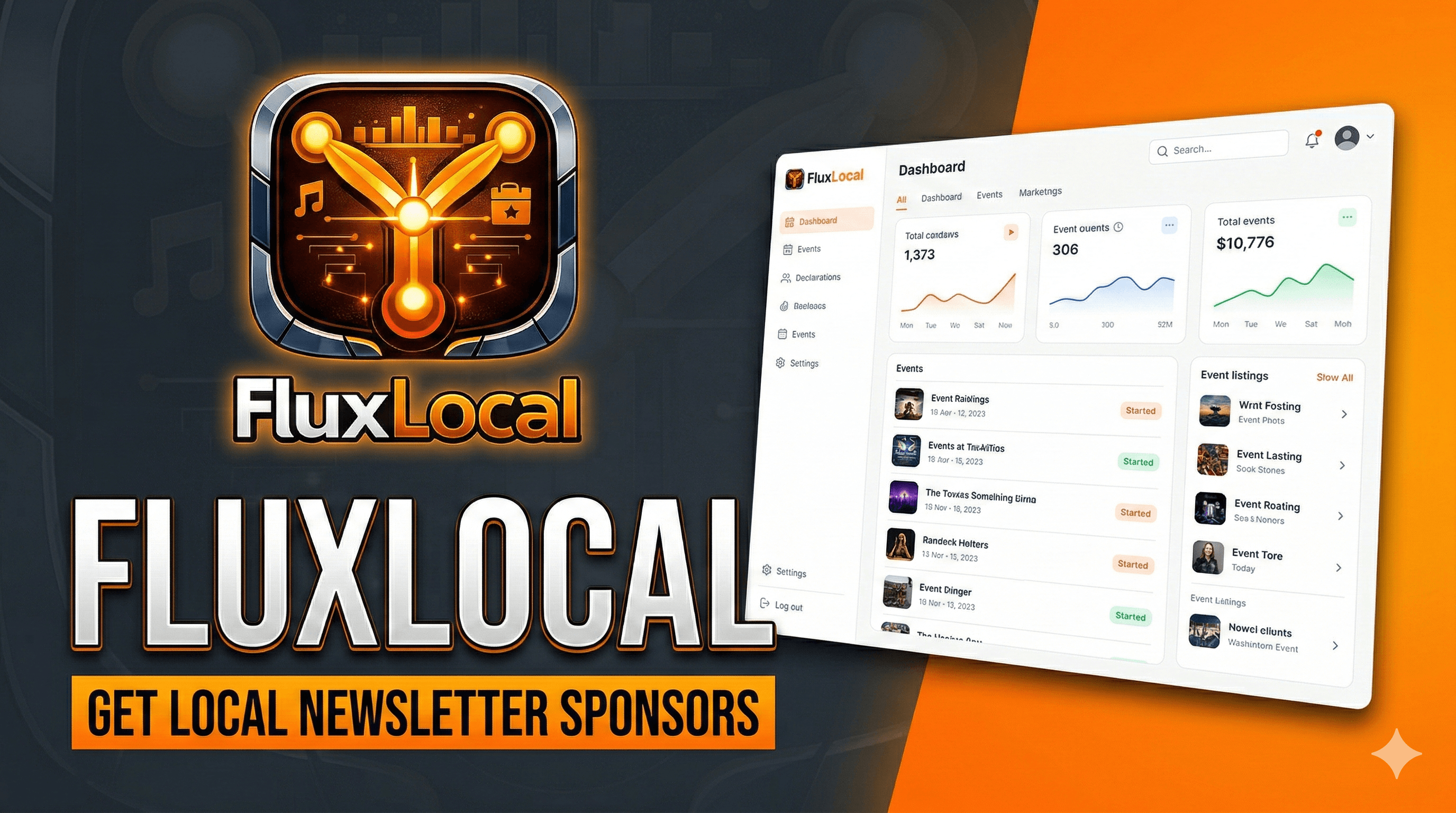
I use FluxLocal to see which businesses are hosting trivia nights, workshops, or live music. Every one of those businesses is a potential sponsor. Instead of "cold" calling, I am "warm" calling. I can say, "I see you're hosting a pottery workshop next month. I can help you sell the last 10 tickets by putting it at the top of my newsletter."
It's much easier to sell a solution to a problem someone actually has (empty tickets) than it is to sell "vague brand awareness."

6. Over-Deliver on the First Campaign
Getting the first "Yes" is the hardest part. Once you have a sponsor, your goal is to make them a customer for life.
- Send a "Thank You": Both when they sign up and after the ad runs.
- Provide a Report: "Your ad was sent to 1,200 people, opened by 650, and clicked by 42."
- Ask for Feedback: "Did anyone mention the newsletter when they came in this weekend?"
If you show them that you care about their ROI, they will renew their sponsorship month after month.
Summary: Small Actions Lead to Big Wins
You don't need a sales team. You don't need a fancy media kit. You just need a genuine love for your community and the guts to ask a local business owner if they want to grow together.
Start small. Pitch the businesses you already love. Use FluxLocal to find the businesses that are already active, and show them how you can amplify their message.
Selling sponsorships isn't about "taking money." It's about building a sustainable ecosystem where you get paid to help your community thrive.
Find the businesses that are already making waves in your town. Use FluxLocal to scout for event-driven sponsorship opportunities today.