From Facebook Group to Flourishing Local Newsletter: A Case Study
Learn how one community leader escaped the Facebook algorithm, converted group members into dedicated email subscribers, and built a sustainable local media business.
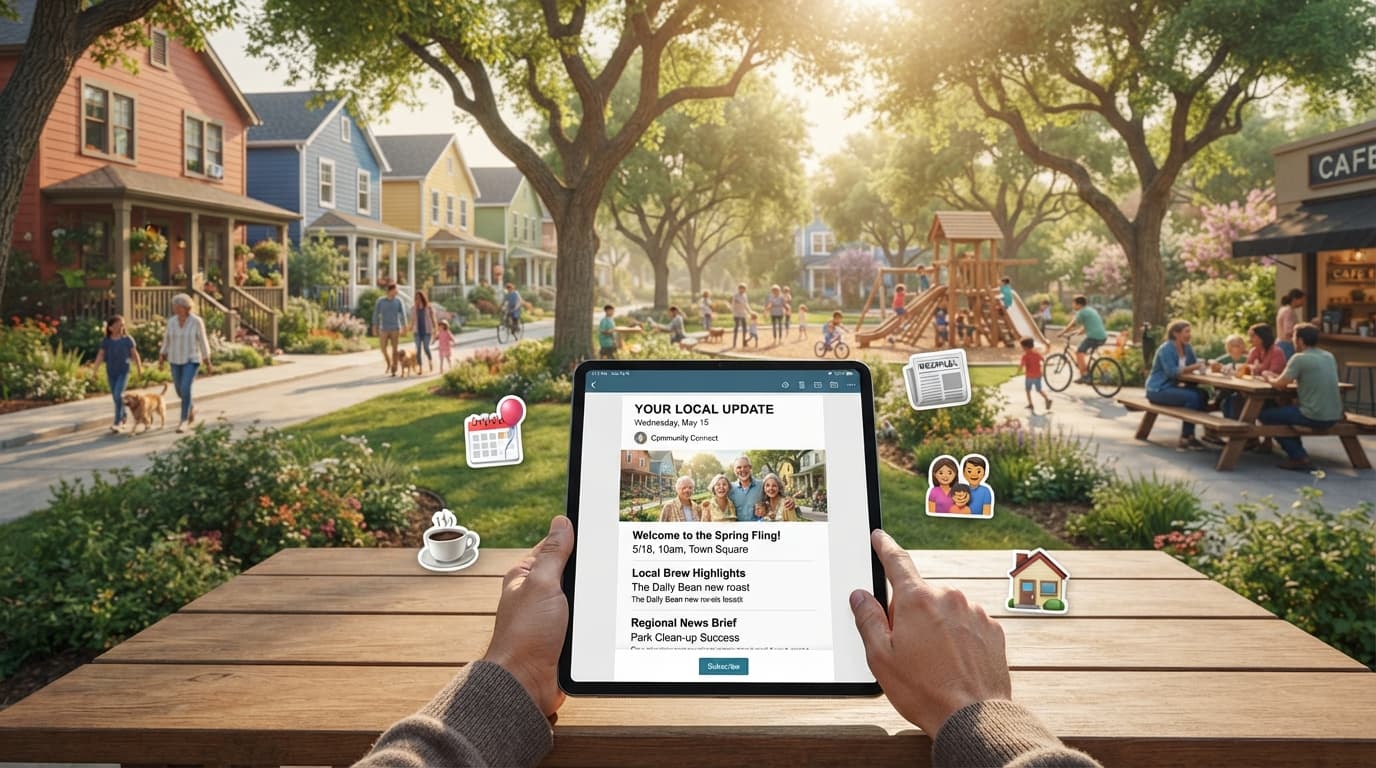
Imagine building a bustling town square. You spend years inviting neighbors, organizing events, moderating discussions, and sweeping the streets. But there is a catch: you do not own the town square. It is owned by a massive, unpredictable landlord who can change the rules, block the entrances, or charge your neighbors an entry fee at any moment without warning. This is the reality for thousands of community builders running local Facebook Groups today.
For years, social media groups were the gold standard for hyper-local connection. They allowed neighbors to recommend plumbers, find lost dogs, and debate school board decisions. However, as organic reach continues to plummet and algorithmic noise increases, community leaders are reaching a breaking point. They are tired of "renting" their audience from social media giants and are searching for a way to "own" their distribution.
This case study details the journey of Sarah Jenkins, a community organizer in the suburban town of Oakwood, who successfully transitioned her 12,000-member local Facebook Group into a thriving, highly profitable weekly newsletter. By reclaiming ownership of her audience, Sarah built a sustainable local media asset that delivers deeper value to residents and a reliable marketing channel for local businesses.
The Problem: The Fragile Foundation of Facebook Groups
In 2018, Sarah started "Oakwood Neighbors & Events" as a simple Facebook Group. Over four years, it grew to 12,000 members. On paper, the community was a massive success. In reality, Sarah was experiencing severe burn-out. The group faced three systemic issues that threatened its long-term viability:
1. Algorithmic Gatekeeping
Even though Sarah had 12,000 members, Facebook’s algorithm decided who saw her posts. Important community announcements, such as town hall meetings or charity drives, would often receive fewer than 200 views because they did not trigger the algorithm's outrage-driven engagement metrics. Meanwhile, controversial or argumentative posts were amplified, creating a toxic community atmosphere.
2. Moderation Fatigue
Sarah and two volunteer moderators were spending upwards of fifteen hours a week policing spam, deleting political rants, and blocking fake accounts. They were working a part-time job for free, while Meta pocketed all the advertising revenue generated by the traffic their community created.
3. Zero Monetization Opportunities
Whenever Sarah tried to pin a post promoting a local business to help cover her time, group members complained about "selling out," or Facebook’s automated systems flagged the post as promotional spam. She had built a highly engaged audience but had no way to monetize it ethically or sustainably.
The Pivot: Choosing the Newsletter Model
In late 2022, Sarah decided she needed a new medium—one that offered direct communication, clean curation, and sustainable monetization. She chose a weekly email newsletter, which she named The Oakwood Insider. Unlike a chaotic social media feed, a newsletter offered unique structural benefits:
- Direct-to-Inbox Access: No algorithms deciding if subscribers see the content. If Sarah sent an email, it landed in her subscribers' inboxes.
- Curated Peace: Instead of endless scrolling through complaints, residents received a clean, thoughtfully structured summary of the week’s best events, local news, and business highlights.
- Economic Ownership: Sarah could sell sponsorships directly to local businesses, retaining 100% of the revenue without platform interference.
The Step-by-Step Migration Playbook
Transitioning an audience from a passive social media platform to an active email subscription is no easy feat. Sarah knew she could not simply post a signup link and expect thousands of people to join. She designed a strategic, four-week migration plan.
Step 1: The VIP Launch and the "Why" Campaign
Instead of pitching the newsletter as a replacement for the Facebook Group, Sarah framed it as a premium upgrade. She pinned a post to the top of the Facebook Group explaining that the group had become too cluttered and that The Oakwood Insider would be a "fast, five-minute weekly digest of everything you actually need to know about Oakwood." She focused heavily on the value proposition: saving time and cutting through the noise.
Step 2: Leveraging Local Incentives
To kickstart signups, Sarah partnered with a beloved local coffee shop, "The Daily Grind." She negotiated a deal where anyone who subscribed to the newsletter during launch week was entered into a raffle to win one of five $50 gift cards. Sarah paid for the gift cards out of pocket, viewing it as a minor marketing investment to build her core list. This single initiative drove 1,200 signups in seven days.
Step 3: The Slow Burn and Weekly Teasers
Every Thursday, Sarah published a "teaser" post inside the Facebook Group. She would share one highly valuable snippet from the upcoming newsletter—such as a list of secret weekend events or a preview of a new restaurant opening—and state, "The full list, along with maps and exclusive discount codes, goes out tomorrow morning to our newsletter subscribers. Click here to join." This created continuous fear-of-missing-out (FOMO) among group members.
Crafting the Perfect Editorial Formula
To keep her unsubscribe rates low and engagement high, Sarah designed The Oakwood Insider to be hyper-scannable. "People do not want to read long essays about local politics," Sarah noted. "They want to know what is happening this weekend, where to eat, and what local construction projects might affect their morning commute."
She established a strict five-section format that she could curate in under three hours each week:
- The 30-Second Scoop: A quick, bulleted summary of the three biggest news stories in town (e.g., school budget votes, road closures).
- Weekend Planner: A curated list of the top 5 family-friendly events happening around town on Friday, Saturday, and Sunday.
- Local Spotlight: A brief Q&A with a local business owner, highlighting their story and offering an exclusive discount code to subscribers.
- Real Estate Roundup: A quick glance at the most interesting home sold that week or upcoming open houses.
- Neighborly Help: A curated selection of the most helpful discussions or recommendations pulled from the Facebook Group.
The Results: Monetization and Metric Milestones
Within twelve months of launching The Oakwood Insider, Sarah’s metrics painted a picture of a highly successful local media brand:
- Subscribers: 5,800 active local readers (representing roughly 25% of the town's households).
- Open Rate: A consistent 64% average open rate (well above the industry average of 22% for local media).
- Click-Through Rate (CTR): 14%, showing incredibly high engagement with local links and partner promotions.
- Monthly Revenue: $4,200 in monthly recurring revenue from local sponsorships.
Local businesses quickly realized that a feature in The Oakwood Insider was far more effective than running vague Facebook ads. A local bakery reported selling out of its weekend pastries within two hours of being featured in Sarah's "Local Spotlight" section. Because Sarah had a direct, high-trust relationship with her readers, her recommendations carried immense weight.
The FluxLocal Advantage
While Sarah’s journey was incredibly rewarding, she faced significant technical hurdles in her first year. Managing subscriber lists, designing mobile-responsive email layouts, coordinating with local sponsors, and tracking click metrics across multiple platforms was a disjointed and exhausting process. This is where FluxLocal changes the game for local community builders.
Built specifically for hyper-local publishers, community leaders, and neighborhood advocates, FluxLocal provides an all-in-one platform designed to turn local engagement into a sustainable business. By integrating content creation, subscriber management, and monetization tools, the platform removes the complex technical friction that often derails independent creators.
With FluxLocal, you get access to:
- Curation Tools: Easily import and format local news, events, and social media discussions into a beautifully designed, mobile-first newsletter template in minutes.
- Sponsor Management: A built-in portal where local businesses can book, pay for, and submit their own ad creatives directly, eliminating back-and-forth emails and manual invoicing.
- Hyper-Local Analytics: Deep insights into which neighborhoods, topics, and local businesses are driving the most engagement, allowing you to refine your content strategy.
- Growth Loop Automation: Built-in referral programs and lead magnets that incentivize your existing subscribers to share your newsletter with their neighbors.
Your Playbook: How to Replicate This Success
If you currently moderate a local Facebook Group, Nextdoor community, or regional sub-Reddit, you are sitting on a goldmine of local attention. Here is how you can start your own migration journey today:
1. Audit Your Current Group
Identify the most popular recurring topics in your community group. Are people constantly asking for contractor recommendations? Are they looking for weekend family activities? Use these insights to define the core pillars of your upcoming newsletter.
2. Choose Your Tech Stack Wisely
Do not piece together three different expensive softwares to send emails, manage ads, and host your landing page. Utilize a dedicated community publishing platform like FluxLocal to keep your operations centralized, professional, and scalable from day one.
3. Launch with Value, Not Just Hype
Secure a partnership with a highly respected local business for your launch incentive. This establishes immediate local credibility and provides an exciting hook to get those crucial first 500 subscribers.
4. Maintain Consistency
Choose a specific day and time to send your newsletter (Fridays at 7:00 AM is a proven sweet spot for weekend planning) and stick to it religiously. Consistency builds trust, and trust is the ultimate currency of hyper-local media.
Conclusion: The Future of Hyper-Local Media is Owned
The era of relying solely on social media algorithms to build and sustain local communities is drawing to a close. Neighbors want curated, high-quality, ad-light spaces where they can connect with their town without the surrounding noise and outrage. Local businesses want direct access to the households surrounding their storefronts without paying soaring ad costs to massive tech conglomerates.
By transitioning from a chaotic Facebook Group to a flourishing local newsletter, you reclaim your time, own your digital real estate, and build a highly profitable business that truly serves your neighbors. Stop building on rented land. Take control of your community's digital town square and start your journey with FluxLocal today.
---CONTENT_END---