Choosing the Best Platform for Your Local Newsletter: Substack vs. Beehiiv vs. Mailchimp
Starting a local newsletter? We break down the pros, cons, pricing, and features of Substack, Beehiiv, and Mailchimp to help you choose the perfect platform for your community.
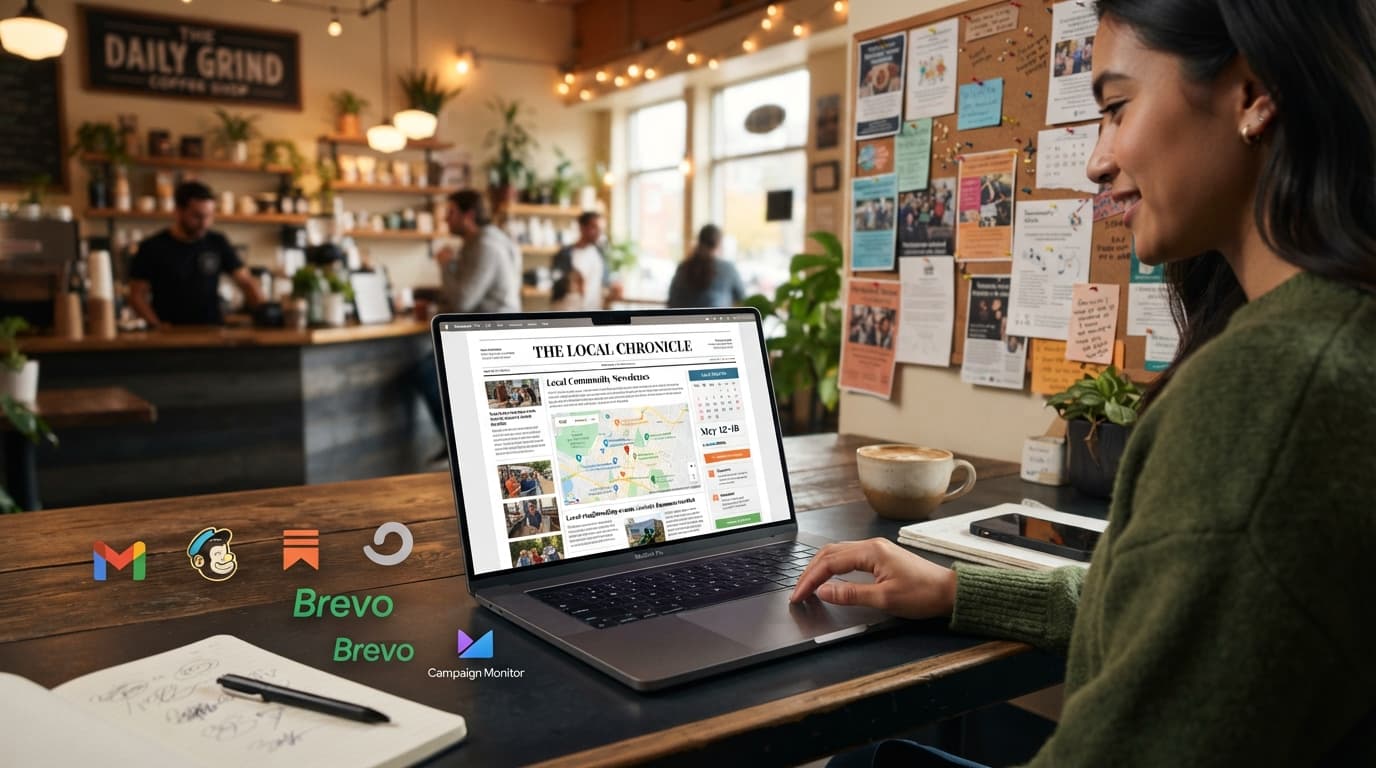
Imagine waking up on a Friday morning, grabbing a cup of coffee from the neighborhood cafe, and opening an email that tells you exactly what is happening in your town this weekend. There is a new farmers' market on Main Street, a charity 5k in the park, a profile on the high school art teacher, and a breakdown of Tuesday’s city council meeting. For a brief moment, the chaotic noise of global social media fades away, replaced by something far more valuable: a genuine connection to your immediate community.
This is the power of the local newsletter. In an era where local newspapers are disappearing at an alarming rate, independent community newsletters are stepping in to fill the void. They are reviving local journalism, boosting civic engagement, and helping neighbors support local businesses. But if you are the community champion stepping up to launch one of these publications, you face an immediate, critical technical hurdle: Which platform should you use to send your newsletter?
The newsletter ecosystem is booming, but three giants dominate the conversation: Substack, Beehiiv, and Mailchimp. Each platform has its own philosophy, pricing model, and feature set. Choosing the wrong one early on can lead to expensive migrations, limited growth, or lost revenue down the road. In this comprehensive guide, we will break down how Substack, Beehiiv, and Mailchimp compare specifically for creators building hyper-local newsletters.
Understanding the Contenders: A High-Level Overview
Before diving into the specific features, it is important to understand what each platform was originally built to do, as their founding philosophies still dictate how they operate today.
1. Substack: The Writer-First Monetization Engine
Launched in 2017, Substack revolutionized the newsletter industry by making it incredibly simple for individual writers to monetize their work through direct subscriptions. Substack’s model is built on simplicity. It strips away complex design options and marketing automation, leaving a clean, distraction-free writing environment. It operates on a revenue-share model: the platform is free to use, but they take a 10% cut of your paid subscription revenue.
2. Beehiiv: The High-Growth Publisher’s Toolkit
Created by some of the early team members behind the wildly successful Morning Brew newsletter, Beehiiv was built from the ground up for rapid audience growth and advanced monetization. It is a feature-rich platform designed for publishers who want to scale quickly. Unlike Substack, Beehiiv uses a flat-rate monthly SaaS (Software as a Service) pricing model, meaning you keep 100% of your subscription revenue (minus standard credit card processing fees).
3. Mailchimp: The Established Marketing Powerhouse
Mailchimp is the grandfather of email marketing. Founded in 2001, it evolved from a simple email tool into a massive, all-in-one marketing automation platform. While Substack and Beehiiv are built specifically for "publishers" (people writing content-heavy newsletters), Mailchimp is built for "marketers" (people selling products, services, or promoting brick-and-mortar businesses). It operates on a subscriber-based pricing model that scales up as your audience grows.
Feature-by-Feature Comparison for Local Newsletters
A local newsletter has unique needs. It requires local discovery, clean layouts for community events, easy monetization options, and ways to highlight local business sponsors. Let's see how our three contenders stack up across these critical categories.
1. Layout, Design, and Customization
How your newsletter looks in an inbox matters, especially when representing a local brand or community group.
- Substack: Extremely limited. Substack forces you into a minimalist, standardized aesthetic. While this ensures high readability and fast loading times, you cannot customize the HTML, use unique layouts, or heavily brand your emails. Every Substack newsletter looks roughly the same.
- Beehiiv: Highly customizable without needing to code. Beehiiv offers a robust visual template editor that allows you to customize fonts, colors, borders, and spacing to match your local brand. It also supports custom web design elements for your newsletter's web archive.
- Mailchimp: The undisputed king of design flexibility. Mailchimp offers a drag-and-drop builder, pre-designed templates, and full custom HTML coding capabilities. If you want to build a highly stylized newsletter that looks like a digital magazine, Mailchimp is your best bet.
2. Growth and Audience Acquisition
Local newsletters serve a geographically restricted audience, making local growth strategies incredibly important.
- Substack: Substack’s greatest strength is its internal recommendation network. When a user subscribes to another Substack, the platform prompts them to subscribe to yours if recommended. However, because this is global, its utility for a hyper-local publisher is limited unless there are several other creators in your specific town or region.
- Beehiiv: Beehiiv is built for growth. It includes native features like a viral referral program (similar to the one Morning Brew used to gain millions of subscribers), where readers can earn physical rewards or premium access for referring neighbors. It also has a built-in recommendation network and advanced SEO tools for your web archives.
- Mailchimp: Mailchimp does not have an built-in network to help you grow. You are entirely responsible for bringing your own traffic. However, it integrates seamlessly with social media advertising platforms (like Meta/Facebook Ads), making it easier to run highly targeted local ad campaigns to acquire subscribers in specific zip codes.
3. Monetization: Subscriptions vs. Sponsorships
How do you plan to fund your local newsletter? Most local publishers rely on either reader subscriptions, local business sponsorships, or a hybrid of both.
- Substack: Excellent for reader subscriptions. Setting up a paywall for premium local reporting or exclusive community guides is incredibly easy. However, Substack does not natively support display ads or sponsorship slots, making it difficult to run ads for the local real estate agent or hardware store. Additionally, their 10% cut can become expensive as your subscriber base grows.
- Beehiiv: The most versatile for monetization. Beehiiv has an integrated "Ad Network" that helps connect publishers with sponsors (though mostly national brands). More importantly for local publishers, Beehiiv offers premium subscriptions with 0% platform fees, and its flexible editor makes it incredibly easy to insert custom sponsor blocks for local businesses.
- Mailchimp: Mailchimp does not charge a transaction fee on paid subscriptions (though setting up a subscription-based newsletter is more complex than on Substack or Beehiiv). However, Mailchimp’s advanced segmentation allows you to send targeted emails to specific neighborhoods, which is highly appealing to local advertisers looking for hyper-targeted placements.
4. Pricing and Cost Predictability
As a local creator, keeping overhead low is vital to reaching sustainability.
- Substack: Free to start, free forever if your newsletter is free. If you turn on paid subscriptions, Substack takes 10%. If you have 1,000 paid subscribers paying $5/month ($5,000/month total), Substack takes $500 every single month.
- Beehiiv: Offers a generous free tier for up to 2,500 subscribers with basic features. Their paid tiers are flat monthly rates (ranging from $39 to $99+ per month) regardless of how much subscription revenue you bring in. This makes costs highly predictable as you scale.
- Mailchimp: Mailchimp can quickly become the most expensive option. Their pricing is based on the number of contacts you have. If you have 10,000 free subscribers, you could easily pay over $100 to $150 per month just to send them emails. If you aren't actively monetizing, Mailchimp can become a heavy financial burden.
A Quick Reference Comparison Table
| Feature | Substack | Beehiiv | Mailchimp |
|---|---|---|---|
| Best For | Writers & Journalists | High-growth Publishers | Businesses & Marketers |
| Pricing Model | Free (10% of paid revenue) | Flat monthly fee (after 2.5k free subs) | Tiered pricing based on list size |
| Design Flexibility | Low (Minimalist) | Medium-High (Great template builder) | Very High (Drag-and-drop, HTML) |
| Growth Tools | Recommendations (Global) | Referrals, Recommendations, SEO | Integrations, Targeted Social Ads |
| Local Sponsorship Ease | Difficult (No native tools) | Easy (Flexible layouts, ad integrations) | Easy (Highly customizable layouts) |
The FluxLocal Advantage
While choosing the right newsletter software is essential for delivering updates directly to your audience's inbox, email is only one piece of the hyper-local puzzle. To truly embed your publication into the fabric of your community, you need to reach people where they are already looking for local information.
This is where FluxLocal comes in. As a premier community-focused digital platform, FluxLocal acts as the perfect companion to your newsletter strategy. Instead of relying solely on the slow crawl of organic email signups, you can syndicate your newsletter content, local event calendars, and community spotlights directly onto the FluxLocal network.
By partnering with FluxLocal, you gain access to an established ecosystem of local readers, business owners, and community leaders who are actively searching for neighborhood updates. It bridges the gap between your private inbox distribution and the wider, public local web, supercharging your subscriber growth and giving your local sponsors the maximum possible visibility.
Which Platform Should You Choose?
Ultimately, the right platform depends entirely on your specific goals, business model, and technical comfort level.
Choose Substack if:
- You are an independent local journalist or storyteller who wants to focus 100% on writing, not marketing.
- Your primary monetization strategy is reader subscriptions (e.g., charging for deep-dive local investigations).
- You want a completely free starting point and do not mind giving up design control or a percentage of your future earnings.
Choose Beehiiv if:
- You view your local newsletter as a modern media business that you want to scale quickly.
- You want to utilize advanced growth hacks, like a customized reader referral program.
- You plan on monetizing through a mix of local business sponsorships and paid subscriptions, and you want to keep 100% of your subscription revenue.
Choose Mailchimp if:
- You already run an established local business (like a boutique, restaurant, or real estate agency) and the newsletter is a tool to drive foot traffic.
- You need highly complex email automations (such as sending a specific welcome sequence based on which neighborhood event a subscriber signed up at).
- You require absolute control over the visual branding and design of your emails.
Conclusion
There has never been a better time to start a local newsletter. Our neighborhoods are starving for reliable, curated, and engaging local information. Whether you choose the writer-focused simplicity of Substack, the growth-oriented powerhouse of Beehiiv, or the highly customizable marketing suite of Mailchimp, the most important step is simply to start writing and connecting.
And remember, you do not have to build your local audience in a silo. By combining your newsletter efforts with the hyper-local reach of FluxLocal, you can amplify your voice, support local commerce, and build a vibrant digital town square that benefits everyone. Choose your platform, draft your first welcome email, and start making your community feel a little more like home.
---CONTENT_END---