Choosing the Right Domain Name for Your Local Newsletter: SEO Best Practices for Regional Media
Discover how choosing the right domain name for your local newsletter can supercharge your regional SEO, build instant community trust, and scale your audience.
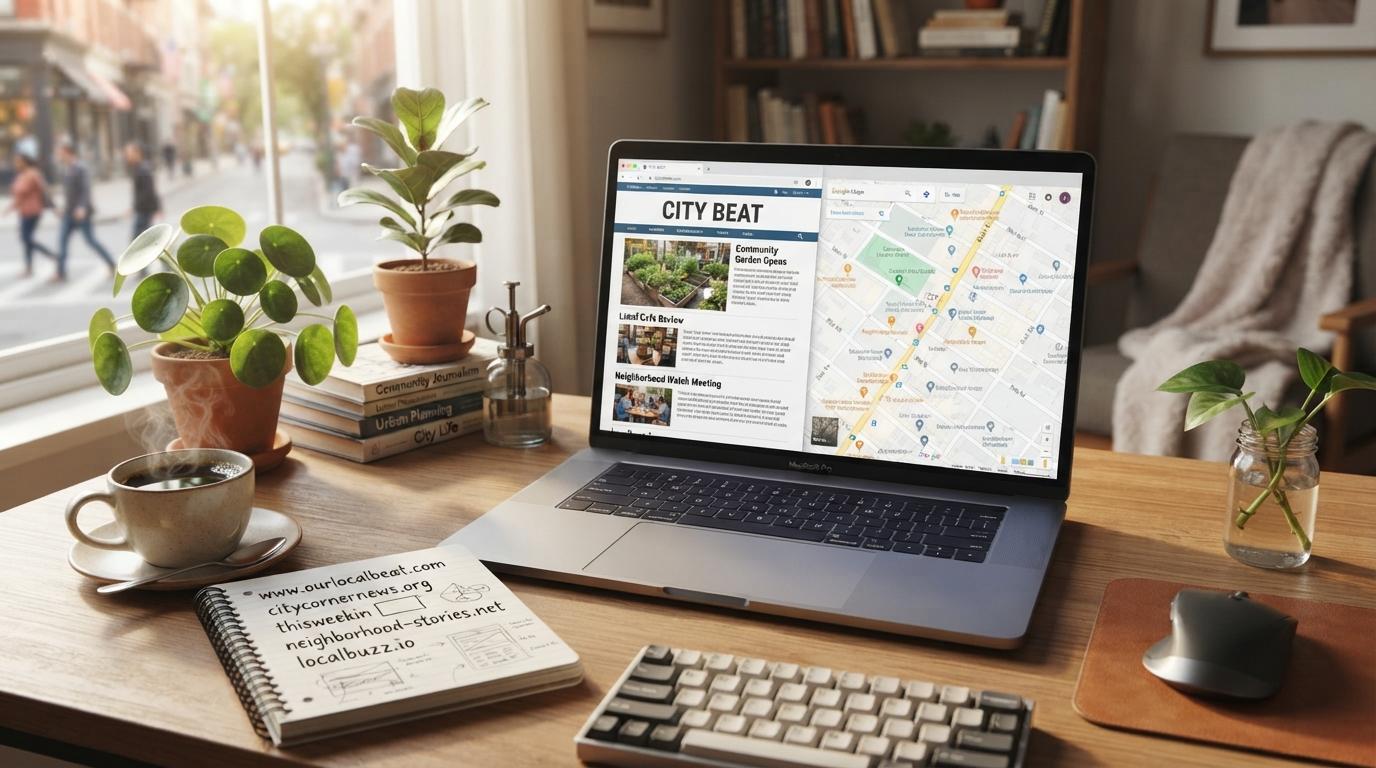
Imagine launching a hyper-local newsletter designed to be the digital heartbeat of your community. You have spent weeks pitching local business owners, curating calendar events, and writing compelling coverage on municipal developments. But when users search for local news, events, or restaurant reviews in your area, your publication is nowhere to be found on the first page of Google. The hidden culprit often lies right at the very beginning of your digital journey: your domain name.
For regional media outlets and independent local publishers, a domain name is far more than just a web address. It serves as your digital storefront, your primary brand identity, and the foundation upon which search engine algorithms determine your geographical relevance. Choosing the wrong domain name can trap your newsletter in SEO obscurity, making it difficult for local readers to find you. Conversely, a strategically selected domain name can fast-track your organic visibility, establish instant editorial trust, and anchor your local presence for years to come.
In this comprehensive guide, we will unpack the exact SEO best practices, structural framework, and naming strategies required to select the ideal domain name for your local newsletter.
1. The SEO Psychology of Local Brand Discovery
Before registering a domain name, it is essential to understand how both human users and search engine crawlers interpret web addresses in a geographic context. Search engines like Google rely on geographic signals to serve relevant content to users performing local searches. While your physical location, Google Business Profile, and localized content play massive roles, your domain name sets the initial baseline for search engines.
Geographic Modifiers vs. Pure Brand Names
When selecting a domain name for a regional media outlet, publishers generally fall into three naming categories:
- Exact-Match Geographic Domains (EMDs): These domains combine the target location with a media keyword (e.g., AustinDaily.com or SeattleLocalNews.com).
- Abstract or Brandable Domains: Unique names that carry no inherent local keyword anchor (e.g., TheSpur.com or Beacon.com).
- Hybrid Domains: A combination of a brand identifier and a geographic keyword (e.g., TheAustinSpur.com or SeattleBeacon.com).
While search engine algorithms have evolved past relying solely on exact-match domains for ranking boosts, geographic keywords within your URL structure still yield significant advantages. They communicate immediate context to human searchers, increasing your Click-Through Rate (CTR) in Search Engine Results Pages (SERPs). A higher CTR signals to Google that your content is highly relevant to users in your specific metro area, which indirectly elevates your organic search positions over time.
2. Anatomical Blueprint of a High-Ranking Local Domain
Selecting a domain name requires balancing SEO optimization, memorability, and long-term brand equity. Use the following anatomical criteria when evaluating your prospective domain names.
A. Integrate Geographic Anchors Without Keyword Stuffing
If your newsletter focuses exclusively on a specific town, city, or county, including that geographical anchor in your primary domain is highly advantageous. However, avoid awkward keyword combinations that look spammy. Names like BestChicagoILNewsletterEvents.com harm user trust and trigger quality filters. Instead, aim for natural, fluid combinations like ChicagoLoopDigest.com or OaklandOvercast.com.
B. Mind the Top-Level Domain (TLD) Extension
The TLD—the part of the URL following the dot—carries structural weight. For regional media publications, your TLD choices usually come down to three options:
- .com (The Gold Standard): Always aim for a
.comextension if it is available. It carries universal authority, maximum consumer trust, and remains the default typing habit for mobile and desktop users alike. - .news / .media / .city (Niche TLDs): Modern top-level domains like
.newsor.mediacan work if the.comvariant is unavailable or exorbitantly expensive. However, some users still default to typing.comout of habit. - ccTLDs (Country-Code TLDs): If your local publication is outside the United States (e.g.,
.cafor Canada,.co.ukfor the UK, or.com.aufor Australia), using your country’s TLD provides a massive localized ranking signal to search engines operating within that sovereign territory.
C. Keep It Short, Pronounceable, and Typeable
Local media relies heavily on word-of-mouth growth, radio sponsorships, podcast mentions, and physical signage at community events. If your domain name cannot be easily understood when spoken aloud, you will lose a substantial portion of direct navigation traffic. Avoid hyphens, numbers, and easily misspelled words.
3. Technical SEO Considerations for Newsletter Domains
From a technical standpoint, your domain configuration dictates how search engines index your newsletter content and how mail servers authenticate your emails. Because a local newsletter functions both as a website (for web archives and SEO landing pages) and an email broadcast system, your domain strategy must support both channels seamlessly.
Subdomain vs. Root Domain Strategy
A common mistake local newsletter publishers make is hosting their newsletter on a third-party subdomain (e.g., yourbrand.substack.com or yourbrand.beehiiv.com). While these platforms offer quick setups, you are building domain authority for the third-party platform rather than your own asset.
To maximize your local SEO footprint, host your publication archives and sign-up pages on your custom root domain (e.g., yourbrand.com) or a dedicated sub-folder (e.g., yourbrand.com/newsletter). This ensures that every incoming backlink, social share, and reader visit builds long-term domain authority for your own digital properties.
Email Deliverability and DNS Configuration
Because your domain name will be sending thousands of local emails daily, your domain's sending reputation is directly linked to your digital brand. To protect your domain's health and ensure your emails land in the primary inbox, set up proper DNS records immediately upon domain registration:
- SPF (Sender Policy Framework): Specifies which mail servers are authorized to send email on behalf of your domain.
- DKIM (DomainKeys Identified Mail): Adds a digital signature to your emails, verifying that the content was not altered in transit.
- DMARC (Domain-based Message Authentication, Reporting, and Conformance): Protects your domain from spoofing and phishing attacks, preventing bad actors from abusing your local brand name.
4. Step-by-Step Checklist for Choosing Your Local Domain Name
Follow this systematic process to evaluate, vet, and secure your domain name before launching your local newsletter.
Step 1: Conduct Local Search and Keyword Research
Use tools like Google Keyword Planner, Ahrefs, or Semrush to identify how your target audience searches for local information. Search terms like "[City Name] news", "things to do in [City Name]", or "[City Name] events" usually have substantial local search volume. If your chosen domain naturally incorporates these high-intent phrases, you gain a structural head start in search engine results.
Step 2: Check Trademark and Entity Availability
Before purchasing a domain, search your state or regional business registry alongside the United States Patent and Trademark Office (USPTO) database. Owning a domain name does not shield you from legal liability if it infringes on an existing local business's registered trademark. Additionally, ensure matching handles are available across major social media platforms like Instagram, X (Twitter), Facebook, and LinkedIn.
Step 3: Evaluate Historical Domain Authority
If you are purchasing an expired or premium domain name that includes your city's name (e.g., buying DenverDigest.com from a domain broker), inspect its historical backlink profile using Wayback Machine and backlink analysis tools. Ensure the domain was not previously used for spam, adult content, or abusive link schemes, as lingering Google search penalties can carry over to your new newsletter platform.
5. The FluxLocal Advantage: Building Your Local Newsletter Ecosystem
Selecting the ideal domain name is only the foundation of building a profitable regional media outlet. Once your domain is secured, you need a robust digital publishing ecosystem tailored to the unique demands of local reporting, community engagement, and regional monetization.
This is where FluxLocal transforms your local publishing strategy. Designed specifically for hyper-local newsletters, independent newsrooms, and community media entrepreneurs, FluxLocal provides an all-in-one platform that connects your custom domain to powerful content management and distribution tools.
Why Regional Publishers Partner with FluxLocal:
- Seamless Custom Domain Mapping: Easily link your custom domain to your publishing platform while keeping full ownership of your SEO authority and subscriber data.
- Hyper-Local SEO Optimization Out of the Box: FluxLocal automatically structures your content with schema markup, location metadata, and canonical tagging designed to help search engines understand your local footprint.
- Integrated Local Monetization: Monetize your newsletter and web archive using native ad placement tools, sponsored business listings, and recurring reader subscriptions.
- High-Deliverability Infrastructure: Maintain pristine sender domain reputations through pre-configured email authentication systems optimized for newsletter delivery.
By pairing a strategically chosen domain name with the native local tools built into FluxLocal, you position your publication for sustainable growth and search dominance right from your launch day.
6. Common Domain Strategy Mistakes to Avoid
Even seasoned journalists and local entrepreneurs fall into domain naming traps. Protect your brand by steering clear of these common missteps:
A. Choosing a Domain That Is Too Geographically Restrictive
If your initial focus is a single neighborhood (e.g., CapitolHillDigest.com), but your long-term business plan includes covering the entire metro region (e.g., all of Seattle), your domain name may restrict your brand expansion. Choose a domain name that allows room for audience growth without losing its hyper-local relevance.
B. Changing Domains Without Proper 301 Redirects
If you decide to rebrand your local newsletter down the road, never abandon your old domain outright. Implement permanent 301 redirects from every URL on your old domain to the corresponding page on your new domain. This passes your hard-earned SEO authority and incoming backlinks to your new web address without breaking links for existing readers.
C. Neglecting Localized Content Signals
A great domain name is not a substitute for high-quality local content. To maximize your regional SEO efforts, complement your domain name with localized schema markup, local event calendars, original reporting, and backlinks from local organizations, municipal hubs, and regional chambers of commerce.
Final Thoughts: Secure Your Local Digital Real Estate Today
Your domain name is the permanent address of your publication in the digital world. By incorporating local geographic anchors, prioritizing typeability, maintaining technical sender security, and establishing full ownership on your own root domain, you set up your local newsletter for sustained organic search visibility and subscriber retention.
Ready to build, launch, and monetize your hyper-local newsletter on a platform built for regional media success? Visit FluxLocal today to take full control of your local publishing business, connect your custom domain, and start growing your community audience standard-setting local SEO tools.
---CONTENT_END---