Automating Local News: How to Curate Regional Updates on Autopilot
Discover how to build a fully automated local news curation engine. Aggregate community updates, parse local feeds, and keep your neighborhood informed on autopilot.
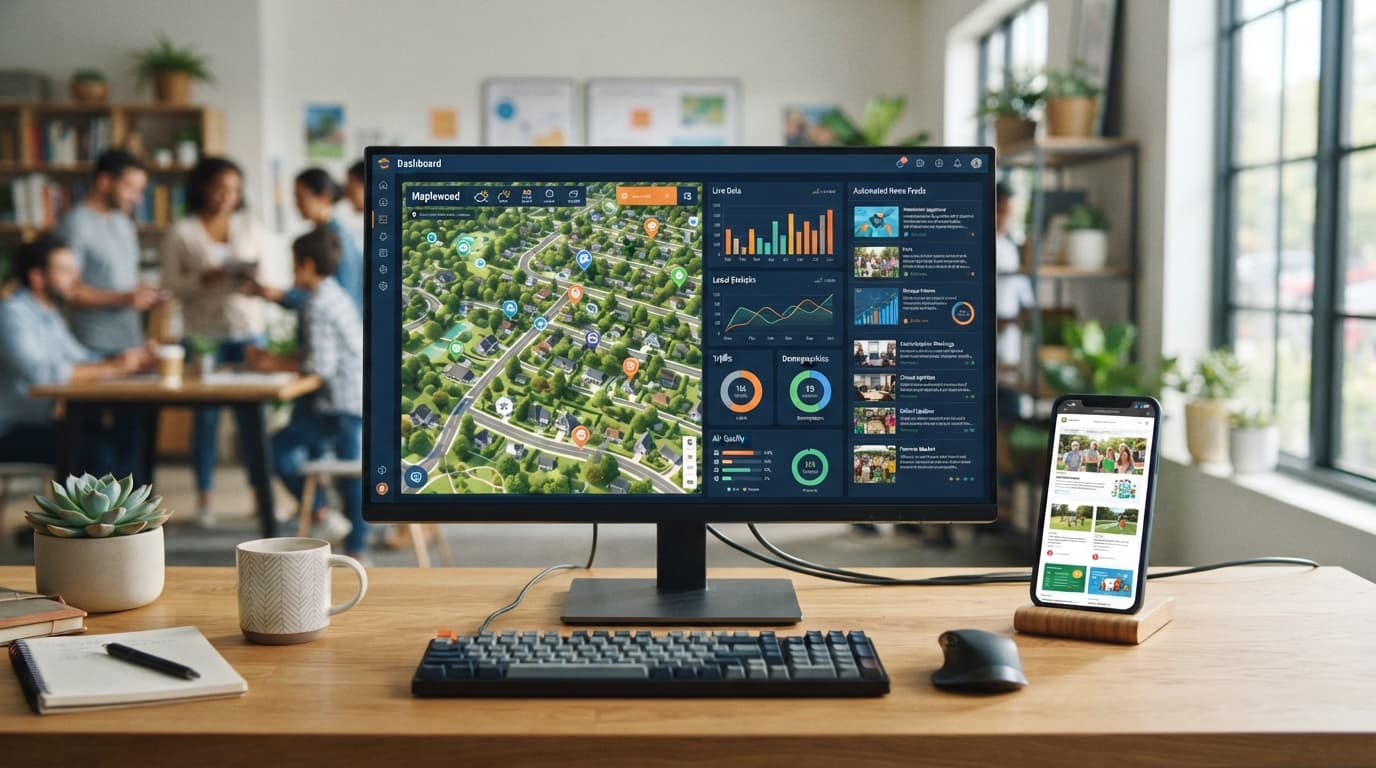
The traditional local newspaper is vanishing. Across the country, regional newsrooms are shrinking, leaving behind vast "news deserts" where communities no longer have a central, reliable source of hyper-local information. Yet, the demand for local updates has never been higher. People want to know about school board decisions, new business openings, road construction, neighborhood events, and local high school sports. The challenge isn't a lack of interest; it is the sheer operational cost of manual reporting and curation.
For community builders, local publishers, and regional entrepreneurs, keeping a neighborhood platform updated manually is a grueling, full-time job. Scraping websites, scouring social media, rewriting press releases, and formatting newsletters can quickly lead to burnout. Fortunately, modern technology offers a solution: automated curation. By building an intelligent, automated pipeline, you can aggregate, filter, summarize, and publish regional updates on autopilot—allowing you to serve your community efficiently without spending dozens of hours copy-pasting links every week.
The Anatomy of Local Information: Why It is Hard to Collect
Before we look at the mechanics of automation, we must understand why local news is uniquely difficult to curate. Unlike national news, which is distributed via major wire services and centralized PR networks, local news is highly fragmented. It lives in dozens of obscure corners of the internet. To build a comprehensive regional update, you must extract data from various disparate sources:
- Municipal Portals: City council minutes, zoning permits, public works updates, and local police blotters.
- School District Sites: Calendar changes, athletic schedules, and board election announcements.
- Social Media Groups: Neighborhood Facebook groups, Nextdoor threads, and local subreddits.
- Chamber of Commerce Websites: Business directories, networking events, and grand opening announcements.
- Local Blogs and Niche Outlets: Food critics, real estate agencies, and regional history enthusiasts.
Historically, gathering these updates required a human curator to visit twenty different websites every morning. It was tedious and unsustainable. However, by treating these disparate sources as structured data inputs, we can construct an automated assembly line that does the heavy lifting for us.
Building Your Automated News Pipeline: Step-by-Step
To automate your local news curation on autopilot, you need to design a system that handles three core stages: Intake, Processing, and Distribution. Let's break down how to configure each phase using modern, accessible software tools.
Step 1: Automated Intake (Sourcing the News)
The first step is establishing digital "nets" to catch local information the moment it is published. You can achieve this using several collection methods:
- RSS Feeds: The backbone of web automation. Use feed readers or aggregators to subscribe to RSS feeds from local government portals, regional blogs, and school district announcements. If a site doesn't have an RSS feed, tools like RSS.app or Feed43 can generate one from static HTML pages.
- Google Alerts and Talkwalker: Set up highly specific alerts for regional keywords, zip codes, mayor names, and local landmarks. Configure these alerts to deliver directly as RSS feeds or email digests.
- Social Listening APIs: Use automation tools to monitor specific local Twitter accounts, official Facebook pages, or subreddits. When a designated account posts, the content is automatically piped into your curation database.
- Web Scraping: For municipal websites that use outdated databases, simple visual scrapers like Hexomatic or Apify can run on a schedule (e.g., every morning at 6 AM) to extract new rows from public tables and output them as clean JSON files.
Step 2: Processing and Enrichment (AI-Powered Summarization)
Raw feeds are messy. They contain duplicate stories, irrelevant updates, and formatting errors. If you publish raw feeds directly to your community, you will quickly overwhelm your audience. This is where artificial intelligence and natural language processing (NLP) come into play.
By connecting your intake sources to an LLM (Large Language Model) API like OpenAI's GPT-4 or Anthropic's Claude via workflow automation platforms (such as Make.com or Zapier), you can process raw data instantly. The AI can perform several crucial tasks:
- Deduplication: Identifying if multiple sources are covering the same local zoning decision or high school football game and merging them into a single update.
- Categorization: Automatically tagging posts by neighborhood, category (e.g., "Food & Drink," "Public Safety," "Education"), and urgency level.
- Summarization: Rewriting dry, 15-page city council PDFs into highly readable, bulleted summaries of no more than 150 words, written in an engaging, community-friendly tone.
- Sentiment Analysis: Flagging potentially sensitive or controversial updates that require a human editor's review before going live.
Step 3: Automated Distribution (Reaching Your Audience)
Once your content is aggregated and polished, it needs to reach your audience. The automated pipeline can instantly dispatch content across multiple channels:
- A Community Web Portal: Feed the processed updates directly into a headless CMS or a dedicated community platform, categorizing them dynamically by zip code or neighborhood.
- Automated Email Newsletters: Configure an email delivery system (such as MailerLite or ActiveCampaign) to pull the top curated updates every Thursday morning and compile them into a beautiful, automated "Weekend Preview" digest.
- Social Media Cross-Posting: Automatically format the summaries into engaging posts for platforms like Facebook, LinkedIn, and Instagram, complete with local hashtags.
The Crucial Role of the "Human-in-the-Loop"
While 100% automation is technically possible, pure autopilot setups can run into issues with accuracy and tone. Local news requires trust. If your automated scraper publishes a hallucinated detail or a misleading summary from an unverified social media post, your platform's credibility will suffer instantly.
The most successful regional curators use a **"90/10" hybrid curation model**. The system does 90% of the manual labor (scraping, synthesizing, translating, and formatting), and a human editor performs the final 10% of the work. Rather than writing from scratch, the editor spends 15 minutes a day reviewing a private dashboard, making minor edits, and hitting "Approve" on posts before they go live to the public. This ensures flawless editorial standards while retaining the immense time-saving benefits of automation.
The FluxLocal Advantage
Setting up your own web scrapers, API integrations, and prompt engineering sequences can be incredibly complex. Writing custom scripts to parse messy local government PDFs and format them for neighborhood-specific newsletters requires technical expertise and ongoing maintenance. This is where FluxLocal transforms the game for community builders.
As a dedicated local community platform, FluxLocal is built from the ground up to handle the unique challenges of hyper-local content aggregation and distribution. Instead of duct-taping together dozens of fragile third-party automation tools, FluxLocal provides an all-in-one ecosystem designed to keep your neighborhood portal thriving on autopilot.
With FluxLocal, you can easily integrate regional feeds, manage hyper-local advertising, organize community events, and segment updates down to the specific street or block level. Its built-in curation-friendly features empower you to ingest local updates, filter out the noise, and publish polished, relevant insights to your audience with ease. FluxLocal takes care of the underlying technical infrastructure so you can focus on what matters most: fostering deep, meaningful local connections and building a sustainable business around community engagement.
Essential Best Practices for Local News Automation
If you are ready to launch your automated regional news platform, keep these essential best practices in mind to maximize engagement and ensure sustainable growth:
- Focus on Hyper-Local Relevancy: People do not want generic state-level news; they want to know what is happening in their immediate 5-mile radius. Use geographic tagging to ensure users only see updates that directly impact their daily lives.
- Credit Your Sources Clearly: Automation is not a license to plagiarize. Always attribute the original source of the news with a clear, clickable backlink. This builds trust with local reporters and drives traffic back to the hard-working journalists covering your region.
- Encourage User-Generated Content (UGC): Make it easy for community members to submit their own updates, such as garage sales, missing pets, or neighborhood events. Your automated system can screen these submissions, format them, and queue them for final approval.
- Structure Your Monetization Early: An automated platform attracts highly engaged local eyeballs. Integrate non-intrusive local ad spaces, sponsored business directories, or premium community memberships directly into your layout.
Conclusion: Empower Your Community Today
You do not need an army of reporters or a multi-million dollar budget to run a highly successful, deeply engaging regional news platform. By embracing the power of modern automation, AI processing, and specialized local community platforms, you can bridge the local information gap, keep your neighborhood deeply informed, and build a profitable digital asset—all on autopilot.
It is time to stop copy-pasting and start connecting. Discover how easy it is to launch, manage, and monetize your own automated neighborhood news portal by visiting FluxLocal. Take the first step toward building a smarter, more connected community today.
---CONTENT_END---