AI-Generated Images for Local News: Ethical Best Practices and Creative Ideas
Discover how hyper-local newsrooms can leverage AI image generation to enrich community stories without breaking reader trust or violating journalistic ethics.
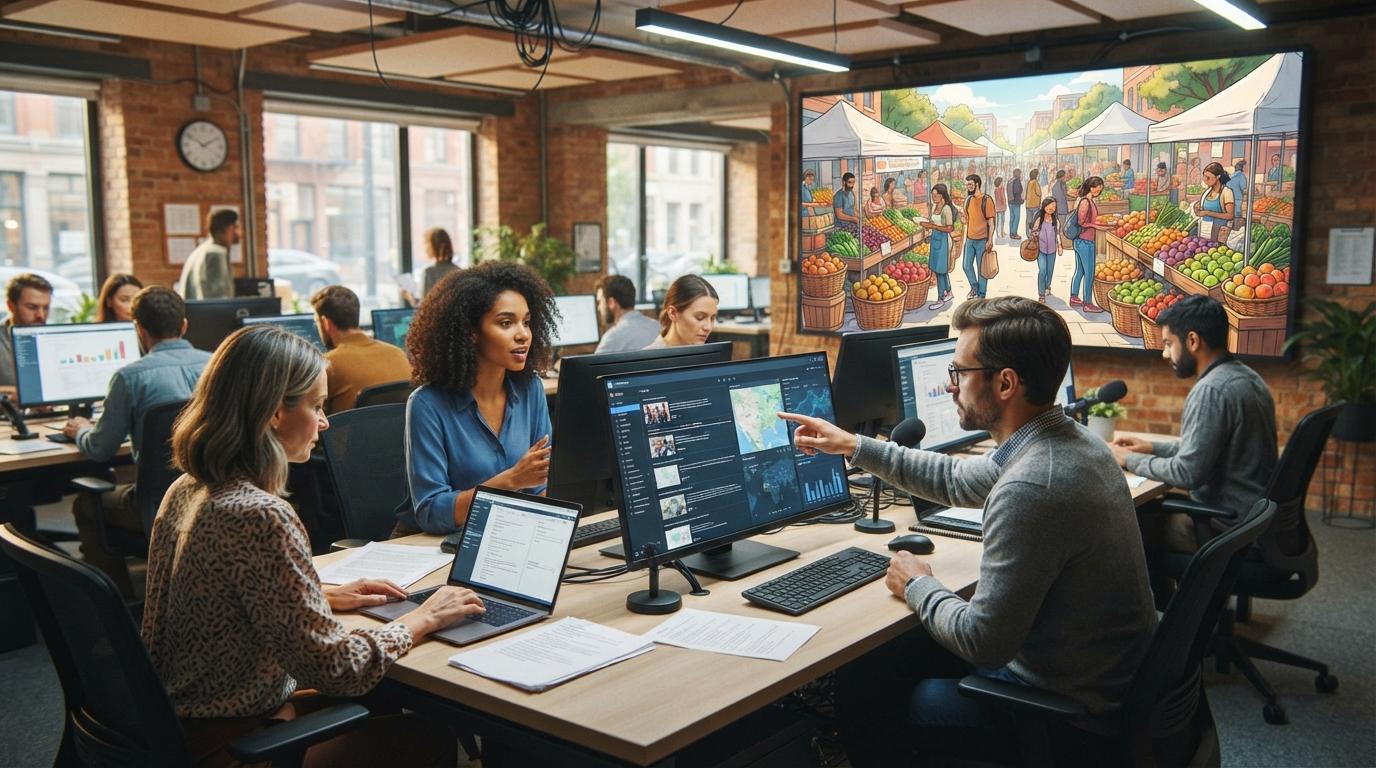
Picture this: It is 11:00 PM on a Tuesday, and a breaking story is unfolding in your town. A proposed downtown revitalization project just received surprise approval from the city council. As a local publisher, reporter, or community blogger, you have the facts, the quotes, and the passion to break the story. But you lack one critical element that drives digital engagement in today’s feed-driven world: a compelling, high-quality image. You cannot photograph a future vision, and stock photo libraries offer cold, generic corporate skyscrapers that look nothing like your town's historic Main Street.
Enter generative artificial intelligence. With a simple text prompt, AI tools can create beautiful, highly specific visuals in seconds. For resource-strapped local news outlets, hyper-local blogs, and neighborhood newsletter creators, AI-generated images feel like a superpower. They democratize visual storytelling, allowing small editorial teams to compete with big-budget national media outlets visually.
However, with great creative power comes immense journalistic responsibility. Local journalism thrives on one irreplaceable currency: trust. When community members open a local news report, they expect real facts about real people and real places. Misusing AI imagery—even unintentionally—can erode that hard-earned public trust in a single publication cycle. So, how can hyper-local publishers ethically leverage AI image generation while maintaining visual storytelling excellence? Let us explore the imperative ethical guidelines, creative strategies, and practical workflows for modern community newsrooms.
The Imperative of Transparency: Ethical Frameworks for Local AI Imagery
Local news outlets serve as the primary record of community life. Unlike national entertainment sites or opinion blogs, local journalism is held to strict standards of truth, accuracy, and authenticity. Introducing synthetic imagery into this environment requires clear, uncompromising ethical boundaries.
1. Never Substitute AI for Photographic Truth
The foundational rule of photojournalism remains unchanged: if a story covers a real, present event—such as a house fire, a high school basketball game, a city council meeting, or a local protest—the visual must be an authentic photograph of that event. Using an AI tool to generate a realistic image of a specific local event, person, or accident is not visual assistance; it is deception.
AI image generators should never be used to simulate real events, real community members, or factual historical occurrences. Doing so misleads the public and compromises the historical record of your municipality.
2. Establish Clear and Visible Watermarks and Labels
Audience trust is built through radical transparency. Whenever an AI-generated image is used in a story, it must be explicitly labeled. Readers should never have to play detective to determine whether an image depicts reality or a synthetic concept.
- Caption Transparency: Include explicit disclosures directly in the image caption. For example: "Illustration: An AI-generated concept of the proposed greenway park."
- Visible Watermarks: Consider placing a subtle, standardized visual icon or label (such as "AI Illustration") in the corner of the graphic itself so that the context travels with the image if shared on social media platforms.
- Metadata Inclusion: Retain or embed IPTC metadata identifying the graphic as synthetic so search engines and social networks can index it accurately.
3. Beware of Unconscious Bias and Stereotypes
Generative AI models are trained on vast datasets scraped from the internet, meaning they often harbor ingrained cultural, racial, and gender biases. When prompting an AI to generate images representing your community—such as "a local business owner," "a school teacher," or "a city worker"—the software may default to outdated stereotypes.
Local publishers must critically review every generated image before publication. Ensure that synthetic representations reflect the true diversity, dignity, and authentic character of the community you serve.
Creative Ideas: When and How to Use AI Images in Community News
While AI should never replace authentic photography of real news events, there are numerous ethical, creative, and highly impactful ways hyper-local publishers can use synthetic visuals to enhance their reporting.
Visualizing Future Local Concepts and Planning Proposals
Local journalism frequently covers future-oriented topics: urban zoning changes, proposed transit lines, or upcoming architectural developments. City planners often release complex, technical blueprints that mean very little to the average resident.
By translating municipal proposals into illustrative AI visuals, newsrooms can help residents visualize what their neighborhoods might look like. For instance, if a city proposes adding protected bike lanes and street-side dining along a specific corridor, an AI generator can produce a conceptual illustration that brings the text of the civic proposal to life for readers.
Enhancing Editorial Essays, Op-Eds, and Deep Dives
Abstract community issues—such as local inflation, seasonal affective disorder in northern towns, digital privacy in schools, or regional water conservation—are notoriously difficult to photograph authentically. Traditionally, publishers resort to bland, repetitive stock photos.
AI imagery allows local editors to create artistic, editorial-style conceptual illustrations tailored specifically to the tone of the article. Rather than using a generic stock photo of money for an article on local tax hikes, an outlet can generate a custom vector illustration featuring recognizable local architectural styles alongside symbolic fiscal art.
Constructing Engaging Visual Style Guides
To prevent AI images from looking like deceptive photo-replications, savvy local newsrooms adopt distinct graphic art styles. By instructing AI tools to generate imagery in stylized formats, you immediately signal to the reader that the image is an artistic concept rather than a photograph.
- Vector and Flat Art Styles: Excellent for infographics, community guides, and educational explainer articles.
- Watercolor and Oil Painting Styles: Perfect for local history feature pieces, human interest stories, and literary reviews.
- Isometric 3D Renderings: Ideal for visualizing traffic patterns, real estate developments, and community event maps.
Developing an Internal AI Code of Conduct for Your Newsroom
Whether your newsroom consists of a single independent publisher or a team of ten local reporters, having a written code of conduct for generative AI is essential. This document ensures consistency and maintains accountability across all published digital touchpoints.
Drafting Your Guidelines
Your team's AI image policy should be easy to understand and publicly accessible to your readers. It should clearly define three core categories:
- Prohibited Uses: Real news reporting, crime coverage, depicting real individuals, or replacing actual press photos.
- Permitted Uses: Conceptual illustrations, abstract topic features, future civic planning visualizations, and decorative banner graphics for recurring columns.
- Mandatory Actions: Multi-step editorial review, mandatory clear captioning, and unbiased prompt creation.
By publishing your AI ethics policy on your site's "About" or "Editorial Standards" page, you demonstrate to your readers that your commitment to truth extends to every pixel on the page.
The FluxLocal Advantage: Empowering Authentic Community Journalism
Navigating the balance between innovative visual technology and genuine local connection can be challenging. That is where FluxLocal transforms how neighborhood news is delivered, managed, and monetized.
As a platform designed specifically for hyper-local content creators, neighborhood publishers, and community voices, FluxLocal provides modern tools that simplify digital publishing without sacrificing authentic audience relationships. The platform understands that local news relies on genuine neighborhood connection, providing intuitive content management workflows that make it effortless to maintain editorial standards, label visual assets accurately, and organize hyper-local stories effectively.
With FluxLocal, community publishers can effortlessly publish high-impact stories, manage visual assets responsibly, and engage directly with readers who care deeply about their immediate geographical area. By combining cutting-edge publishing technology with hyper-local focus, publishers can elevate their brand, maintain institutional integrity, and spend more time doing what matters most: telling the essential stories of their local neighborhoods.
Best Practices Summary for Local AI Visual Content
As AI image generation technology continues to rapidly evolve, staying anchored in journalistic principles will keep your local publication trustworthy and authoritative. Here is a quick checklist for your newsroom before hitting publish on any AI-generated visual asset:
- Is this depicting a real, happening event or real person? If yes, replace it immediately with an authentic photograph.
- Is the style stylized enough? Choose illustrative, artistic styles over ultra-realistic photographic prompts to eliminate reader confusion.
- Is the caption clear? Double-check that the image explicitly credits the visual as an AI-generated conceptual illustration.
- Have you checked for bias? Review the generated asset to ensure fair, non-stereotypical representations of your local demographic.
- Does it add genuine value to the story? Ensure the graphic clarifies, educates, or enhances the reader's understanding of the subject matter.
Conclusion: The Future of Responsible Local Storytelling
Generative AI tools are neither the salvation nor the downfall of local news—they are simply powerful creative instruments. When handled recklessly, synthetic visuals threaten to weaken the vital bond of trust between local news outlets and the neighborhoods they serve. But when guided by a firm ethical framework, radical transparency, and creative purpose, AI image generation allows resource-strapped community newsrooms to tell richer, more engaging visual stories than ever before.
By blending technological innovation with traditional journalistic integrity, modern publishers can keep their communities informed, engaged, and inspired. Ready to elevate your neighborhood publishing and lead the next era of local digital journalism? Discover how FluxLocal can streamline your publishing workflow, connect you with local audiences, and amplify your community stories today.